
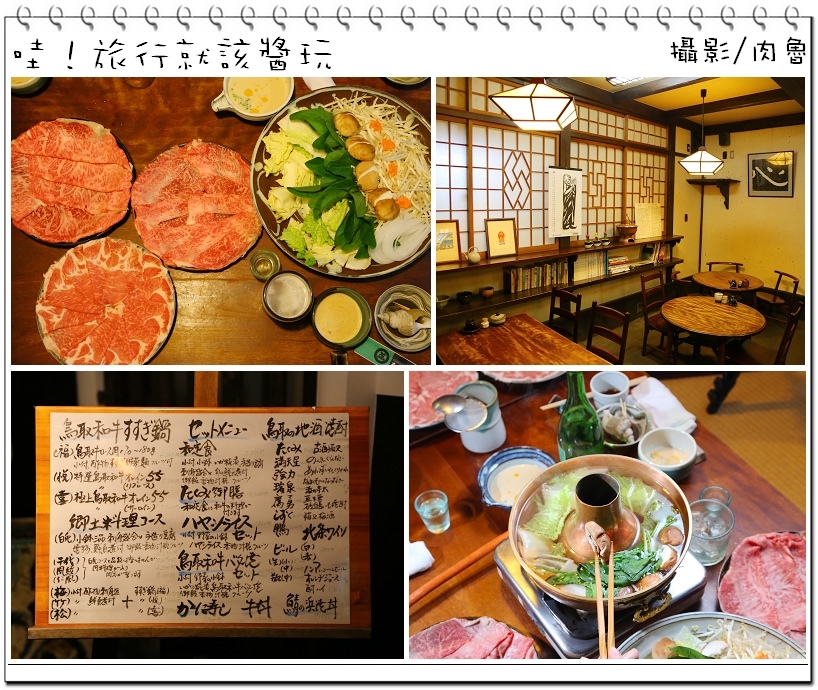
Takumi Kappo is known for Tottori Wagyu shabu-shabu, serving finely marbled beef in a wooden tatami setting that evokes the origins of Japanese hot pot dining.
Mar
Thu
Japan: Takumi Kappo | Exquisite Tottori Wagyu with Even Marbling That Melts in Your Mouth, a Comfortable Storehouse-Style Interior with Japanese Tatami, Must-Try Wagyu Shabu-Shabu in Tottori, and the Birthplace of Japanese Shabu-Shabu
Everyone thinks of the Tottori Sand Dunes when Tottori, Japan, is mentioned. For food lovers, however, visiting Tottori without eating Tottori Wagyu is almost the same as never having come. Tottori Takumi Kappo is about a five-minute walk from the north exit of Tottori Station and is the birthplace of shabu-shabu in Japan. It serves A5-grade Tottori Wagyu whose melt-in-the-mouth texture is utterly irresistible.
To be honest, before visiting Tottori, I had no idea its Wagyu was this impressive. Only after arriving did I learn that Tottori has produced Wagyu since the Edo period and that certificates of birth were even issued for the cattle at the time, showing just how renowned Tottori Wagyu was. The finest grade is called “Tottori Wagyu Olein 55,” indicating that at least 55% of the fatty acids in the beef are oleic acid, the principal component of olive oil. Takumi Kappo in Tottori serves it every day. Its Japanese-style tatami dining spaces are also extremely comfortable.
Inside the vintage copper pot is
a clear broth made by simmering Wagyu brisket for more than six hours. Swish the beef back and forth for just over ten seconds and it is ready to eat. Its smooth tenderness and melt-in-the-mouth texture are so delicious they feel unbeatable in the entire universe. If you come to Tottori without eating Tottori Wagyu, do not say you have really been to Tottori.
Tottori Takumi Kappo
Official website:
http://www.hotpepper.jp/strJ000111102/
Telephone: 0857-26-6355 (+81-857-26-6355)
Hours: 11:30–14:30 (L.O. 14:00), 17:00–22:00 (L.O. 21:00)
Lunch available; open as usual on Sundays
Regular closing day: Third Monday of each month (open every day in August and December)
Address: 652 Sakaemachi, Tottori City, Tottori Prefecture
View larger map
▲ Tottori Takumi Kappo was opened in 1962 by Shoya Yoshida, a leader in Tottori's folk-craft movement. Yoshida served as a military doctor during the war. While on an inspection visit to Beijing, he tasted the mutton hot pot of northeastern China, so he introduced it to Japan and opened this
Takumi Kappo restaurant.
That also began the Japanese custom of eating shabu-
shabu. Because the owner himself was active in the folk-craft movement, he collected many folk-art objects. Dining at
Takumi Kappo feels as wonderful as being inside a folk-art museum.
Takumi Kappo's owner also once visited Taiwan to study cooking with Fu Pei-mei. This connection gives the restaurant a wonderfully familiar feeling. Taiwan and Japan truly are close friends.
The Japanese name “Takumi Kappo” means a master of the culinary craft.
Takumi Kappo occupies a traditional storehouse-style building designed by its owner, Dr. Shoya Yoshida. It has a wooden inner structure covered by thick layers of earth, giving the building inherent fire resistance. Dining on the first floor is mainly at tables and chairs, while the second floor primarily has tatami seating. The lamps, windows, hanging pictures, and other collected objects all exude an artistic atmosphere.
Takumi Kappo uses
copper pots for its shabu-shabu. Does it not evoke the atmosphere of eating Taiwanese pickled-cabbage and pork hot pot? The restaurant contains many folk-art pieces purchased by the owner in Japan and abroad, and each is worth examining carefully.
▲ I love Japanese houses that are not lavish but overflow with warmth. It is hard to imagine that this is a restaurant for Wagyu shabu-shabu.
▲ We dined on the second floor this time. The wooden staircase leading upstairs has tremendous character. With each step, the wood answers with a creak or two, a sound I have always felt is a tribute to the passage of time.
▲ The second floor has a small private room for two. The burner is heated with gas, and opening the window reveals the streets of Tottori. It feels wonderfully easy and relaxed.
▲ Because we visited as a group, we sat in this large private room, which accommodates about 15 people. Plates of vegetables and dipping sauces for shabu-shabu were already spread across the table, waiting for us to take our seats. The owner's pottery collection can be seen in every space. Tottori is, in fact, a city of crafts.
Dining at Takumi Kappo subtly immerses you in the beauty of craftsmanship.
▲ At
Takumi Kappo, you can order the ¥4,120 “Fuku” Tottori Wagyu shabu-shabu set. It includes a plate of Tottori Wagyu, a small side dish, a vinegared dish, and a vegetable platter. Considering what it includes, I do not think the price feels especially expensive.
▲ Lift the lid of the copper pot and you will discover an exceptionally clear broth. A small taste seems almost like plain water, yet you can sense a subtle difference. We later learned that it was made by simmering Wagyu brisket for six hours. I have no idea how it remains so transparent and light; all I can say is that the Japanese are truly remarkable.
▲ The Tottori Wagyu makes an imposing impression when served. The marbling is extremely even, and the portion is very generous. At a glance, there seemed to be about ten large slices. Every serving is weighed before being brought to the table.
▲ The slices of Tottori Wagyu on this plate are larger, so there are a few fewer of them. Because the servings are determined by weight and each meat plate is about 160 grams, there is no need to worry if your own plate has fewer slices.
▲ For anyone who does not eat beef, sliced pork is also available; it is the plate at the very bottom. The vegetables are fresh and natural as well, including napa cabbage, bean sprouts, shiitake mushrooms, and bok choy. To eat Wagyu shabu-shabu, first place the vegetables in the pot and cook them. Adding vegetables gives the broth even more savory sweetness. Once you have eaten some greens, you can start swishing the meat.
▲ Tottori Wagyu is so highly graded that it is ready after being swished in the broth for just over ten seconds. Look at these people...fighting over one slice of Tottori Wagyu, ha ha. This beef has everyone scrambling for it; it is so delicious that stealing someone else's slice almost seems necessary!
▲ Look at the marbling on this cooked slice of Tottori Wagyu. The fat melts with the lightest touch of your tongue, while the meat is wonderfully soft, tender, and smooth. It is astonishingly good. I could easily swish my way through ten plates of Tottori Wagyu.
▲ The appetizers in the Tottori Wagyu shabu-shabu set include vinegared seaweed. Its sweet-and-sour flavor is very appetizing. This snail has thick flesh full of gelatinous richness. The off-white condiment below it is the dipping sauce for the Wagyu, filled with the aroma of sesame. I recommend eating several bites of Tottori Wagyu plain before trying it dipped in the sauce.
▲ Later, we ordered two more plates of Tottori Wagyu and continued feasting. Once all the food was gone, we added springy udon noodles to the pot. They thoroughly absorbed the essence of the broth, now sweet with meat juices and vegetables. The bowl of udon after the meal left its fragrance in our mouths and made us wish for more!!
▲ In Japan, be sure to pair the meal with an excellent draft beer or a cup of sake and immerse yourself in Japanese daily life. (Excessive drinking is harmful to your health.)
▲ Finally, we were served Tottori pears. They were exceptionally juicy, with a rich, sweet fruit fragrance, and tasted so good that I wanted to ask the owner, “Could I have another one?”
▲ When you come to Tottori, you must eat Tottori Wagyu shabu-shabu. Skipping it would truly make the journey a waste. If you do not want shabu-shabu, regional dishes and set meals are also available. Being able to enjoy top-grade Wagyu shabu-shabu for ¥4,120 is outstanding value.
▲ After nearly six decades in business,
Tottori Takumi Kappo's building overflows with stylish retro character. Even solo diners can enjoy Tottori Wagyu to their heart's content. Traveling all the way from Osaka to Tottori is absolutely worthwhile just to taste this delicious beef.
Tottori Takumi Kappo
Official website:
http://www.hotpepper.jp/strJ000111102/
Telephone: 0857-26-6355 (+81-857-26-6355)
Hours: 11:30–14:30 (L.O. 14:00), 17:00–22:00 (L.O. 21:00)
Lunch available; open as usual on Sundays
Regular closing day: Third Monday of each month (open every day in August and December)
Address: 652 Sakaemachi, Tottori City, Tottori Prefecture
View larger map
Japan: Tottori Sand Dunes | A Mysterious, Fantastic Hidden Landscape Formed by 100,000 Years of Nature, with the Magical Feeling of Roaming the Sahara and Even Camel Rides Across the Dunes (About 2.5 Hours from Osaka to Tottori Station and 0.5 Hours from Tottori Station to the Dunes)
Japan: The ¥1,000 Sightseeing Taxi Discount You Must Use in Tottori | A Tourist Service Exclusively for Foreign Visitors That Even Solo Travelers Can Use, with a Japanese-Chinese Interpretation System in the Car for Easy Communication Without Japanese. Each Ride Lasts a Full Three Hours. For the Tottori Sand Dunes, Hakuto Shrine, Hakuto Coast, Uradome Coast, Tottori Castle Ruins, or Amedaki Falls, the ¥1,000 Sightseeing Taxi Is the Right Choice
Japan: Hakuto Shrine in Tottori | Japan's Cutest Rabbit Amulets, Irresistible Rabbit Souvenirs, the Myth of the White Rabbit of Inaba, a Deity Who Grants Fortunate Matches, and the Lovers' Sanctuary on the Hakuto Coast
Rou Lu: Traveling Through Taiwan's Hidden Places and Exploring Beautiful Scenery in Japan and Korea
Posted by Rou Lu in
Popular (
Overseas Travel
Japan Travel
Source: 肉魯 走遍全台灣●環遊全世界 | Original URL: https://damon624.pixnet.net/blog/posts/43498919
Where would you stay for this story?
This is a stay-recommendation demo. Partner links will be enabled after confirmation.
Kaike Onsen and Tottori stays
Choose an onsen inn, city hotel or stay area that fits the article context.