
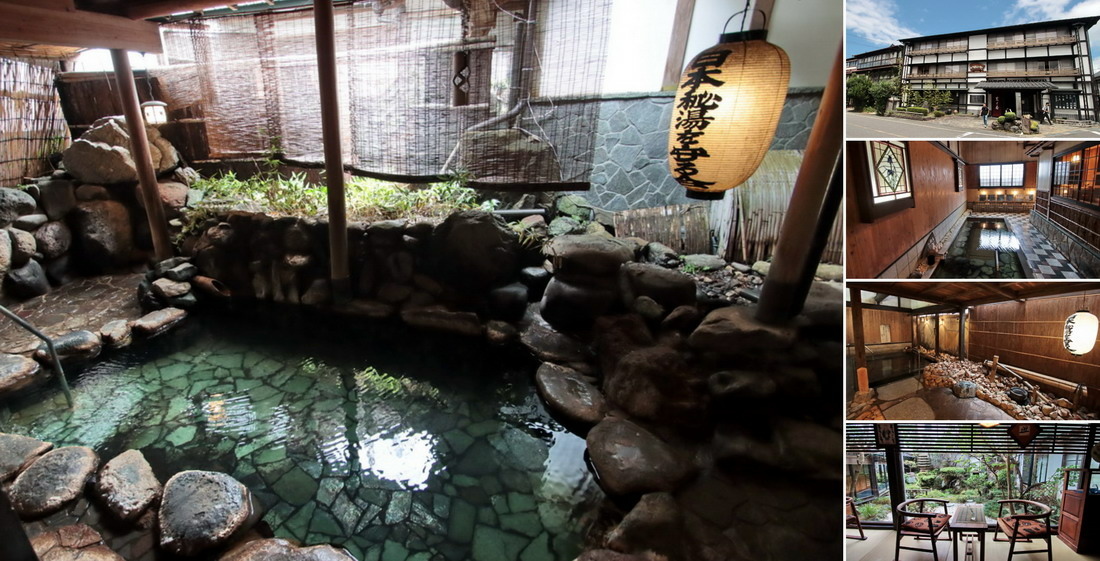
Iwaiya has a history of about 130 years and is one of the oldest hot spring inns in the San’in region. Its Japanese folk-craft atmosphere is also worth taking time to appreciate.
Tottori, Japan | Iwaiya, a Member of the Japan Association of Secluded Hot Spring Inns: 130 Years of History, a Showcase of Japanese Folk Art, and the Oldest Onsen in the Sanin Region @ Qi Ge's Food and Travel Tango :: PIXNET ::
Aug
Sun
Tottori, Japan: Iwaiya of the Japan Association of Secluded Hot Spring Inns | 130 Years of History, a Showcase of Japanese Folk Art, and the Oldest Onsen in the Sanin Region
#TravelInJapansSaninRegion #TottoriAttractions #IwamiAccommodationAndTravel #JapanAssociationOfSecludedHotSpringInns #IwaiOnsen #Iwaiya
#JapaneseLivingNationalTreasures
#ExploreTottoriWithToripy
Iwai Onsen: Iwaiya
Address:
544 Iwai, Iwami-cho, Iwami-gun, Tottori Prefecture
Telephone:
Day-use bathing:
Friday, Saturday, Sunday, and Monday, 12:00-14:00; adults 1,000 yen, children 1,000 yen; hand towel 100 yen, bath towel 200 yen
Private bath:
3,300 yen including tax for 45 minutes; same-day reservation required
Access:
Take the JR Sanin Line from Tottori Station to Iwami Station. From in front of the station, take a bus toward Iwai Onsen for about ten minutes and get off at Iwai Onsen, or take a taxi for about seven minutes.
The baths are open to overnight guests 24 hours a day. The men's and women's baths switch at 20:00 each day.
Official website:
https://iwaiya.jp/
View larger map
When traveling in Japan, my first choice and most eagerly anticipated onsen trips are to inns displaying a paper lantern marked Nihon Hitou wo Mamoru Kai, the Japan Association of Secluded Hot Spring Inns, signifying their membership. Although the association recently became embroiled in controversies over commercialization and rankings, prompting many famous inns to withdraw, that has not diminished my passion for Japan's hidden hot springs. I greatly admire the late founder Iwaki Hifumi's philosophy: in an age dominated by large reinforced-concrete buildings, true travel should return to the mountains and forests, seeking a small mountain onsen inn as a temporary home. Travelers should “seek a journey that feels like a journey.”
The association's membership principles include a long history, a high-quality spring, a location deep in an inconvenient mountain forest, and water that is not recirculated. At present, only one hidden onsen in Shimane and one in Tottori have been selected in Japan's Chugoku region. Iwaiya, the Tottori inn I visited, is at Iwai Onsen in Iwami. Rather than deep in the mountains, it stands in a small town by the hills that feels almost forgotten. On a weekday the streets were remarkably quiet, with old wooden buildings scattered along a straight, broad road and hardly anyone in sight.
▲ During Iwai Onsen's heyday in the Meiji and Taisho eras, it reportedly had more than ten onsen inns. After a major fire swept through the resort in 1934, it gradually declined, and only Iwaiya and Akashiya remain today.
▲ Iwaiya, with 130 years of history, was rebuilt in 1935.
The 130-year-old Iwaiya has the classic appearance of a Japanese onsen inn. My first impression was of a building seasoned by time, but never dilapidated or poorly maintained. A faint scent of incense drifts through the lobby, elegant and lingering. Old furniture, ceramics, calligraphy, paintings, textiles, and flower arrangements fill the refined room, while the garden is incorporated as a borrowed view. The owner's care is apparent everywhere, and every work on display has a distinguished provenance.
Iwaiya's seventh-generation proprietress, Yoko Yamada, is devoted to Tottori's traditional folk crafts. The lobby's wooden tables, chairs, cabinets, and other furniture are works by Tottori master craftsman Shoya Yoshida (1898-1972). The cushions available for guests to use were made by Tottori textile artist Keiko Teraguchi, who studied under stencil-dyeing artist and Living National Treasure Keisuke Serizawa (1895-1984). The glass cabinet contains pottery by Okinawan ceramic artist and Living National Treasure Jiro Kinjo (1911-2004), as well as work for display and sale from nearby renowned kilns including
Iwai Kiln
Enkoji Kiln
Calligraphy, paintings, and textile art also cover the walls of the lobby and corridors. Even the cup used for a coffee here is a celebrated kiln-fired piece costing several thousand or even more than ten thousand yen.
Iwaiya can be described as a place that both exhibits Tottori folk crafts and puts them into everyday use.
▲ Iwaiya's lobby. These elegant furnishings and decorations were created by local Tottori craftspeople and folk artists.
▲ The wooden chairs overlooking the inner garden are works by Tottori master craftsman Shoya Yoshida (1898-1972); the cushions are by Tottori textile artist Keiko Teraguchi.
▲ This wooden chair and cushion are also by Shoya Yoshida and Keiko Teraguchi. The textile hanging behind them appears to be the work of another noted artist.
▲ A glass display cabinet in one corner of the lobby holds pottery by Shoya Yoshida and Living National Treasure Jiro Kinjo (1911-2004), along with work for sale from nearby Iwai Kiln and
Enkoji Kiln
and other renowned kilns.
▲ Works displayed for sale by a pottery studio that has operated for 45 years in Iwami, the same town as the inn.
This kiln was also the next stop on our itinerary.
▲ Pottery by Okinawan ceramic artist and Living National Treasure Jiro Kinjo (1911-2004).
▲ Seventh-generation proprietress Yoko Yamada also loves floral art and decorates every corner of the inn with different fresh flowers.
▲ Besides soaking at Iwai Onsen, visitors can enjoy freshly brewed coffee in the lobby.
▲ The coffee cups are famous kiln-fired pieces costing several thousand or even more than ten thousand yen per set.
Iwaiya's bathing area has a refined Zen design and evokes the Taisho era throughout. Its high-ceilinged architecture blends Japanese and Western styles with some Western decorative art, creating an elegant and stately atmosphere. The bathing area is not especially large. There are only the men's and women's sections, which switch at 20:00 nightly. One side has a modest indoor bath and open-air bath, while the other has just one indoor bath.
First, let us look at the women's bath on the day of our visit. It contained the indoor Choju-no-Yu and the open-air Seto-no-Yu, for a total of two pools.
▲ The corridor from the lobby to the baths likewise displays Japanese folk craft combining Zen sensibility and beauty.
▲ The men's and women's sides switch at 20:00 every evening. On this day, the women's side had an indoor and an outdoor pool, while the men's side had one indoor pool.
▲ Entrance to Choju-no-Yu and Seto-no-Yu.
▲ Changing room and clothing storage for Choju-no-Yu and Seto-no-Yu.
▲ Amenities in the men's and women's baths include razors, combs, shower caps, cotton pads, and swabs.
The following photographs show Choju-no-Yu, a high-ceilinged wooden indoor space decorated with stained glass on the walls and mosaic floor tiles. Its rectangular pool is small and would feel crowded with four or five people, but the center is quite deep at about one meter. This standing bath is a point of pride for the inn. The hot-water outlet is labeled as drinkable water from the original spring, and paper cups are provided so guests can drink it directly.
For context, Iwai Onsen is known as the oldest hot-spring resort in the Sanin region, with a history of 1,200 years. The local water is a colorless sulfate spring with a slightly salty taste. The source used by the hotel is about 50 degrees Celsius and flows directly into the baths without added water for cooling.
▲ Choju-no-Yu.
▲ Choju-no-Yu is not large and would feel crowded with four or five people. The deeper center section is a standing bath.
Iwaiya's only open-air bath is Seto-no-Yu, although it is really semi-open-air. The pool is built from large river stones and other rock, surrounded by bamboo blinds and fencing. It is slightly larger than Choju-no-Yu and reportedly uses the same source, but no paper cups are supplied for drinking the spring water.
Upon entering Seto-no-Yu, you immediately see the association's signature white paper lantern. Merely seeing it makes the setting feel wonderfully atmospheric and mysterious, adding even more character to the soak.
The men's side that day was Iwai-no-Yu, with just one indoor pool. Its changing and clothing-storage areas were plainly much smaller.
This is the most landscaped of Iwaiya's three pools. A sliding door from the changing room opens onto a long space. Bathers walk along a short stone path before reaching the high-ceilinged pool at the far end. A white association lantern hangs on one side of the path, beside a dry landscape garden with a bamboo deer scarer, creating a strong sense of Japanese Zen. The bath itself is still very small, however. If four or five large men shared it, they probably would not stay very long.
▲ Both Iwai-no-Yu and Seto-no-Yu display the association's white paper lantern.
▲ Iwai-no-Yu is small, but its deepest section reaches one meter and allows guests to enjoy a standing bath.
▲ The outlet at Iwai-no-Yu is covered in crystals deposited by the hot spring, demonstrating the quality of its water.
▲ The high open space above the pool.
In addition to three communal nude-bathing pools divided between the men's and women's areas, Iwaiya has one private bath. It includes a private tatami sitting room and its own pool. The room can be used by two people for 45 minutes at 3,300 yen including tax, with an on-site reservation required that day.
Iwaiya has only thirteen fully Japanese-style guest rooms, accommodating fifty people, in sizes from eight to sixteen tatami mats. Although this is a 130-year-old inn, the rooms do not look dated at all. They receive good daylight, are clean and refreshing, and the sheets and quilts look bright and new. When guests arrive, the proprietress also prepares flowers that she arranged that day.
Plans with one night and breakfast cost 19,800 yen per person for two sharing a room. One-night, two-meal plans for two sharing start at about 25,000 yen per person. Upscale kaiseki meals made with summer rock oysters, autumn abalone, winter Matsuba crab, and Tottori wagyu
can also be reserved in advance.
▲ Beneath the wooden staircase to the third floor is another thoughtful arrangement by the proprietress.
▲ A standard eight-tatami Japanese room.
▲ Special rooms accommodating up to four people, named Tsubaki, Fukuju, and Satsuki. The proprietress emphasizes that the guest-room tatami was made by Japanese artisans.
▲ The entrance to Iwaiya's second-floor dining room.
Qi Ge's Food and Travel Tango
Qi Ge's Food and Travel Tango
Posted by Qi Ge's Food and Travel Tango in
Popularity (
Overseas Travel
[Asia] Japan
Source: 齊哥的食旅探go | Original URL: https://paulchi543.pixnet.net/blog/posts/15341980725
Where would you stay for this story?
This is a stay-recommendation demo. Partner links will be enabled after confirmation.
Kaike Onsen and Tottori stays
Choose an onsen inn, city hotel or stay area that fits the article context.