
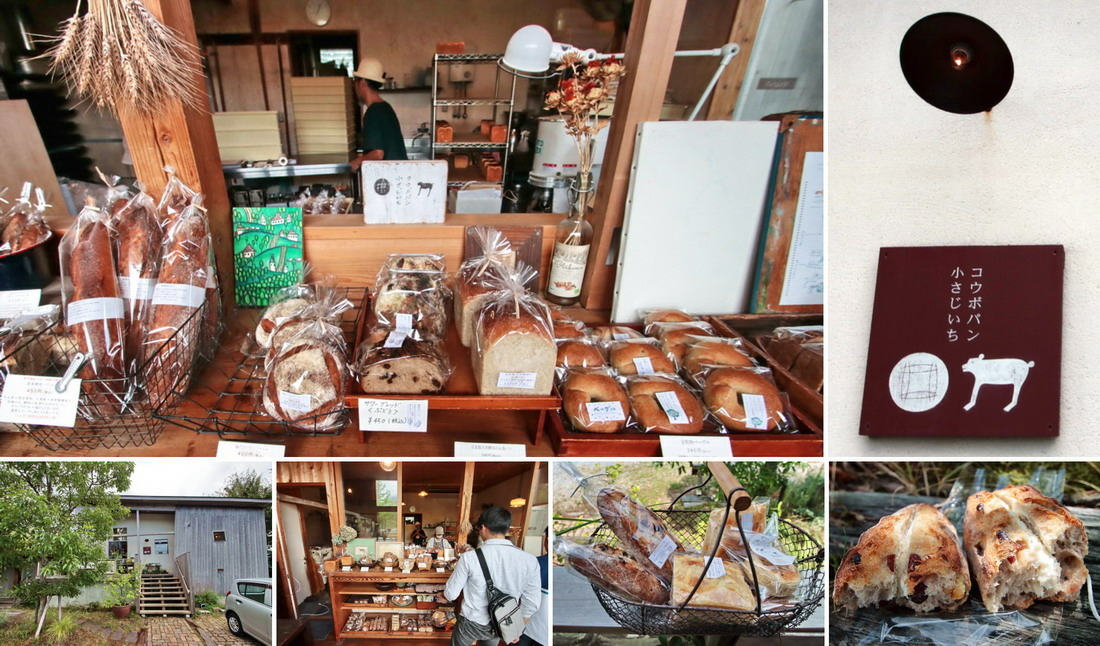
Kosaji Bakery at the foot of Mount Daisen uses ingredients from small farms and house-made natural yeast. Its rustic countryside setting and distant views of Daisen make it worth the detour.
Sep
Tue
Kosaji Bakery, Tottori, Japan | A country-style bakery at the foot of Mount Daisen, creating delicious bread with small-farm ingredients and homemade natural yeast
#RecommendedTottoriFood #HokiTravel #MountDaisenTottori #DaisenMakibaMilknoSato #DaisenDairyCountry #KosajiBakery #KoboPanKosajiIchi #KosajiBakery #ToripyTakesYouAroundTottori
Kosaji Bakery (Kobo Pan Kosaji Ichi)
Address:
1713-1 Kanayadani, Hoki, Saihaku District, Tottori Prefecture
Tel:
Hours:
Wednesday-Saturday, 11:00 a.m.-4:00 p.m.; closed for winter from January through March
Official website:
https://kosaji-1.com/
View a larger map
Near Daisen Makiba Milk no Sato, famous for its milk soft-serve ice cream, is a charming little mountain bakery with the feel of the European countryside. It is called Kosaji Bakery, or Kobo Pan Kosaji Ichi, a name meaning “little teaspoon” in Chinese. It is well worth making a special detour to buy some bread.
This mountain bakery is a five- or six-minute drive from Daisen Makiba Milk no Sato and only seven or eight minutes by car from the Shoji Ueda Museum of Photography. Mount Daisen can be seen in the distance from the entrance. The small wooden storefront, genuinely aged or perhaps deliberately weathered, is complemented by old secondhand furniture, little plants, tall straight trees, an herb garden, a picture-book-style sign, and a handmade shop information board. Together, they create the atmosphere of a secluded mountain cafe. In fact, besides the bakery, a second wooden cabin next door houses a small restaurant where bread is the staple. Although it is deep in a mountain forest, customers arrived continuously during our visit. Every Tuesday at noon, the restaurant next door starts accepting reservations for that Wednesday through Saturday, and business is exceptionally brisk.
▲ Mount Daisen is visible through the clouds and mist in the distance. The weather was unstable on the day of our visit, and the mountain coyly revealed only half of itself.
▲ Kosaji Bakery occupies two wooden buildings, one on each side. The low building on the left is the small restaurant, while the bakery is on the right.
▲ At the foot of the bakery steps hangs a shop information board that combines handmade charm with a picture-book style.
▲ The picture-book-style sign has two logos, a loaf of bread and a bear. The owner said the bear signifies that, with the bakery so deep in the mountain forest, perhaps only bears would come.
The interior of the wooden building is small, and it feels crowded when five or six people are inside at once. Despite its size, the room is arranged with meticulous attention to detail. An old cabinet and elementary-school desks and chairs are accented with dried flowers and driftwood, while every wooden tray holding bread bears the mottled marks and scars polished by time.
The bakery's owner, Komei Nishimura, opened the shop with his wife in 2006. A picture-book-style leaflet that visitors may freely take explains that Kosaji Bakery makes its own natural yeast using clean local spring water and the fresh, cool air. At an elevation of 300 meters, the long, cold winters allow the yeast to develop slowly. The bakery also uses locally produced whole-wheat flour and ingredients from small farms. Its flour is Nishinokaori whole-wheat flour made from wheat grown around Mount Daisen. Its high water absorption makes it ideal for European-style bread.
▲ Bakery owner Komei Nishimura is on the right; the two women beside him are staff members.
▲ The interior is small and feels crowded with just five or six people inside at once, but its decor is meticulous and carefully considered.
▲ Even the little baskets used while selecting bread fit the shop's atmosphere perfectly.
The “Tour Map of Shops Around the Bakery” on the table was drawn and lettered by the shop itself. As detailed as a work of art, it depicts small businesses with a character similar to Kosaji Bakery. Anyone may take a copy, making it easy to explore nearby shops while visiting the bakery. By sharing the same philosophy and helping one another thrive, these neighboring businesses better express the area's distinctive character and create something more lasting.
▲ Elementary-school desks and chairs are used as furnishings inside the shop, though I do not know whether visitors may sit on them. The nearby bookcase holds many books related to food and drink.
▲ The “Tour Map of Shops Around the Bakery” is hand-drawn and handwritten by the shop, and visitors are welcome to take a copy.
▲ The open book on the shelf displays a feature on Kosaji Bakery by a Japanese publisher.
▲ The picture-book-style shop leaflet. Its reverse side, shown below, explains how the bread is made and how reheating can restore a just-baked texture.
The bakery offers many kinds of bread, including loaves, bagels, baguettes, and sandwiches. All are European-style breads made with whole-wheat flour, starting at 220 yen each. Instead of the soft, fluffy texture typical of Japanese bread, they are chewy in every bite and have a rich wheat aroma.
Each kind of bread lists its main ingredients and potential allergens, as well as thoughtful suggestions for when to eat it, such as at breakfast or afternoon tea, and what to pair it with. Some loaves are even branded with the bakery's bear emblem, making them irresistibly cute.
▲ This bread, branded with Kosaji Bakery's bear emblem, is a relatively moist muffin. The bakery recommends serving it with butter or honey.
▲ Our purchases that day.
That day I ate the walnut, cranberry, and cream cheese sandwich, or kurumi to kuranberi kurimu chizu sando, for 450 yen. It looks like a small French baguette, but its texture is more like German bread. The crust is slightly tough, and the body is dense, with a wheat aroma that grows richer as you chew. I believe reheating it would make the texture even better. The cream cheese inside is silky, mildly sweet, and richly milky, pairing beautifully with the sweet-tart fragrance of dried cranberries and the nuts.
▲ The shop also sells its own jam, along with jam made by small farmers in other regions.
▲ The bakery also sells German pretzels, or Brezel, whole-wheat cookies, various kinds of organic red beans, and other foods.
▲ The small restaurant beside the bakery has the same style as the shop.
▲ The restaurant's dishes pair ingredients from small farms with the bakery's own bread. Image source: Kobo Pan Kosaji Ichi on Facebook.
▲ A loop-bus stop stands directly in front of Kosaji Bakery.
Click here for the timetable
Brother Chi's Food and Travel Tango
Brother Chi's Food and Travel Tango
Posted by Brother Chi's Food and Travel Tango in
Popular (
Overseas travel
[Asia] Japan
Source: 齊哥的食旅探go | Original URL: https://paulchi543.pixnet.net/blog/posts/15342113557
Where would you stay for this story?
This is a stay-recommendation demo. Partner links will be enabled after confirmation.
Kaike Onsen and Tottori stays
Choose an onsen inn, city hotel or stay area that fits the article context.