
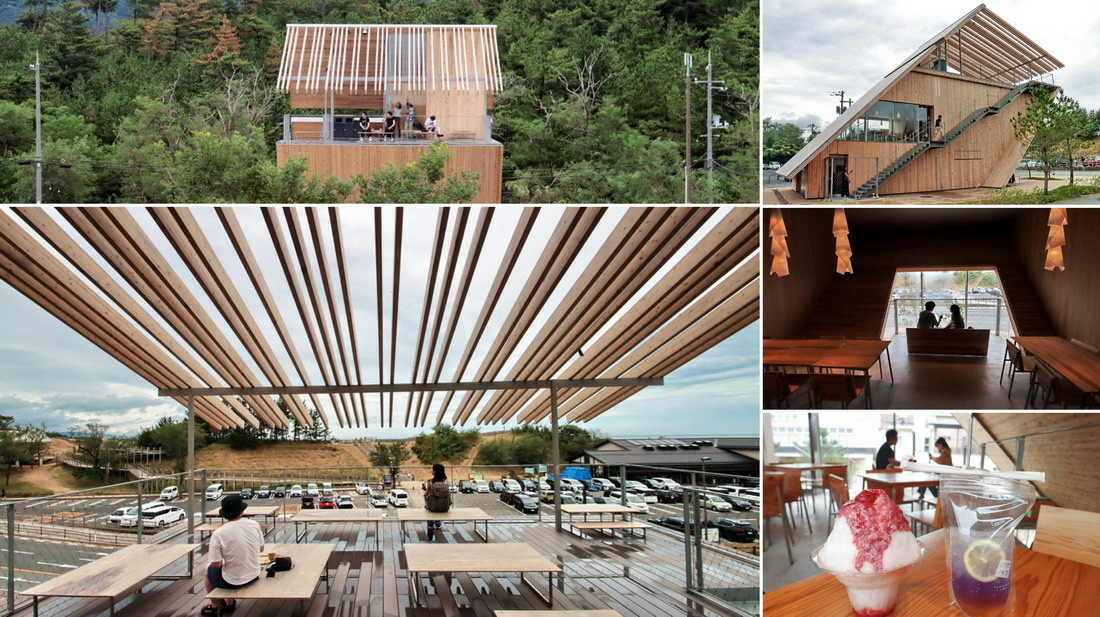
Takahama Café near Tottori Sand Dunes was designed by Kengo Kuma with an approach that lets the architecture blend into the landscape. It is a newer highlight to add to a visit to the dunes.
Sep
Wed
Tottori, Japan: Takahama Cafe | Kengo Kuma's "anti-object" architecture and the newest highlight at the Tottori Sand Dunes
Recommended attractions in Tottori, Japan
Food in Tottori City
Takahama Cafe
#TakahamaCafe
Takahama Cafe
Tottori Sand Dunes
Kengo Kuma
#KKAA #toripy
Explore Tottori with us
Takahama Cafe
Address:
2164 Yuyama, Fukube-cho, Tottori City, Tottori Prefecture (on the Sakyu Kaikan grounds)
Telephone:
Business hours:
Official website:
takahama-cafe.com/
View larger map
Architecture enthusiasts will certainly be familiar with Kengo Kuma. He has left many classic architectural works across Japan and Taiwan, quite a few of which sparked enormous interest and became must-see local attractions. Examples include SunnyHills in Minami-Aoyama, Tokyo, the nearby Nezu Museum, the Starbucks Reserve Roastery in Nakameguro, and the Suntory Museum of Art at Tokyo Midtown in Roppongi. That wave has now reached Tottori as well. Directly opposite the entrance to the long-established Tottori Sand Dunes attraction stands Takahama Cafe, which opened in August 2022. Designed by Kengo Kuma, this freestanding cafe embodies his signature concept of "defeated" or anti-object architecture.
▲ Takahama Cafe seen from the steps at the entrance to the Tottori Sand Dunes.
▲ The top floor of Takahama Cafe is an open terrace with a distant view of the Tottori Sand Dunes.
▲ The "ground" around the building uses sand, the defining element of the Tottori Sand Dunes, to emphasize its integration with the local environment.
Designed by Kengo Kuma and Associates (KKAA), Takahama Cafe fully expresses three of Kuma's hallmark ideas: anti-object architecture, layered construction, and harmony with the surrounding environment. Kuma's idea of "defeated architecture" responds to the dominant direction of architecture since the twentieth century, when taller buildings and prominent landmarks were increasingly prized. Instead, he argues that the building itself should step away from the spotlight. Local materials, design adapted to the site, and the value of coexistence between people and the land should define what architecture can be.
The primary material used at Takahama Cafe is cross-laminated timber (CLT) produced in Tottori. It is a three-story wooden building whose exterior leans at a 17-degree angle. Wood helps it blend into the forested hills behind it, while the exterior color connects it with the sand dunes directly in front. In fact, the building's outward form was inspired by the Tottori Sand Dunes.
▲ The exterior color, 17-degree incline, and sloping roof all evoke the Tottori Sand Dunes.
▲ The rear of the cafe.
The entrance facade of Takahama Cafe has U-shaped, floor-to-ceiling windows. The glass walls on both sides form an isosceles triangle with the wooden structure, creating a very striking sight.
Indoor seating is on the first and second floors, while the third floor provides open-air seating. Wood dominates the interior and creates a seamless connection with the cross-laminated timber on the exterior. The tables and chairs share the same material and color palette as the interior paneling. Altogether, it is a minimalist wooden cafe with a contemporary Japanese style.
▲ Here is the cafe entrance, a small glass door.
▲ Step inside, and the glass-walled seating area greets you immediately.
Takahama Cafe has a beautifully flowing counter made from layer upon layer of wooden boards. Even the pendant lamps hanging above contain a thoughtful detail: their washi-paper shades are sprinkled with sand from the Tottori Sand Dunes. This small touch echoes Kuma's practice of drawing on local materials and integrating a building with the surrounding terrain.
▲ A pendant lamp inside the cafe. Its shade is made of washi paper sprinkled with sand from the Tottori Sand Dunes.
▲ The seats beside the first-floor ordering counter are made from Tottori cedar and blend with the flowing backrest wall feature and counter.
Ordering works much like it does at Starbucks: customers go to the counter, place their order, and wait to collect it. A glass refrigerated case beside the counter displays desserts and breads, which is particularly convenient for foreign visitors who do not speak the language because they can simply point to what they want. The case holds around seven or eight kinds of mostly European-style bread, generally priced at 385 yen. There is also a Daisen bacon burger and a Tottori wagyu burger, both priced at 1,280 yen. Desserts focus on daifuku made with seasonal fruit, such as muscat grapes and pears in summer, priced at 500 yen each.
Drinks include coffee such as Americanos and lattes, along with various cold drinks packaged in clear handled pouches. Shakes, barley tea, butterfly-pea lemonade, and Takahama's house-made cola all cost 780 yen. Two summer-only shaved-ice desserts are also available, one featuring Tottori strawberries and the other Twentieth Century pears, each priced at 891 yen.
▲ Muscat grape daifuku, 500 yen each.
▲ Takahama Cafe menu, August 2023.
▲ Takahama Cafe menu, August 2023.
▲ The wooden tray has a wonderfully refined feel.
▲ We ordered the Tottori strawberry shaved ice (891 yen) and butterfly-pea lemonade (780 yen).
▲ The handled plastic pouch is convenient to carry and makes the drink's beautiful color easy to appreciate.
▲ Tottori strawberry sauce with whole pieces of fruit is poured over both the bottom and the top of the shaved ice. It is colorful, refreshing, and delicious.
▲ The cafe provides disposable wooden straws and spoons.
▲ The self-service area for utensils, sugar, and milk.
Although the cafe has only three floors, it includes an elevator. To reach the upper floors, visitors can either take the elevator or use the building's only outdoor metal staircase. When it rains, that uncovered staircase is less convenient because it has no shelter.
The main seating area at Takahama Cafe is on the second floor. In the front half of the long, narrow space facing the dunes, warm amber lights create a cozy atmosphere. At the very front, one window-side table offers a private scenic seat for two and is the cafe's most popular spot. The rear seating resembles the glass-walled area on the first floor and receives abundant natural light. When the cafe is not crowded, visitors can choose a seat according to the atmosphere they prefer.
▲ The private scenic seat for two is the most popular spot at Takahama Cafe.
▲ Part of the second-floor seating resembles the glass-walled design on the first floor and receives excellent natural light.
▲ The cafe's third floor is an open-air seating area. The roof offers no protection from rain or sun, but this area is likely very popular during crisp autumn weather.
齊哥的食旅探go
齊哥的食旅探go
Posted by 齊哥的食旅探go in
Popularity (
International travel
[Asia] Japan
Source: 齊哥的食旅探go | Original URL: https://paulchi543.pixnet.net/blog/posts/15342209573
Where would you stay for this story?
This is a stay-recommendation demo. Partner links will be enabled after confirmation.
Kaike Onsen and Tottori stays
Choose an onsen inn, city hotel or stay area that fits the article context.