
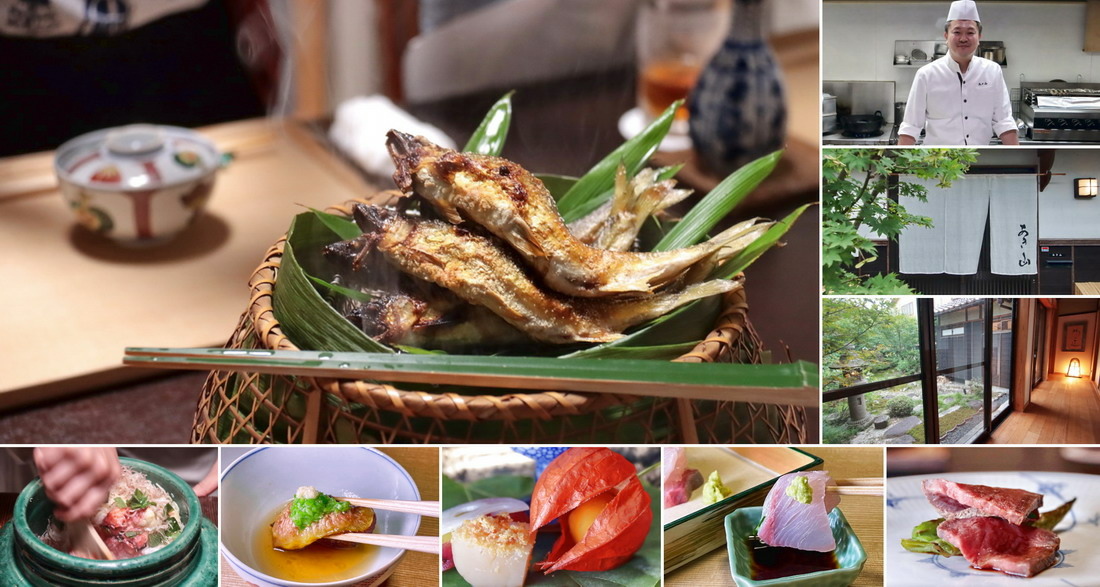
Michelin one-star Akiyama serves an 11-course private omakase-style dinner for 10,000 yen. The kaiseki meal highlights seasonal ingredients, tableware, and the pleasure of each dish arriving with a sense of surprise.
Sep
Fri
Tottori, Japan: Michelin One-Star Akiyama | A 10,000-Yen Private Omakase Dinner with Eleven Exquisite Kaiseki Courses, Each Bringing a New Surprise
#RecommendedTottoriFood #MichelinOneStarRestaurantInKurayoshi #Akiyama #あき山
Kurayoshi: Akiyama (あき山)
Address:
3030-2 Yodoya-cho, Kurayoshi, Tottori, Japan
Telephone:
Hours:
6:00 p.m.–10:00 p.m.; irregular holidays
Price:
Depending on the ingredients, 10,000, 15,000, or 20,000 yen per person; reservations required
Transportation:
About fifteen minutes by taxi from JR Kurayoshi Station
View larger map
That's right: Tottori has Michelin restaurants, too. The 2019 Michelin Guide Kyoto Osaka + Tottori listed two two-star restaurants, four one-star restaurants, and ten Bib Gourmand selections in Tottori. Akiyama (あき山), in Kurayoshi, received one Michelin star.
Akiyama stands in a quiet residential neighborhood, in a converted Japanese home with front and rear gardens. It is about fifteen minutes by car from Kurayoshi Station and a two-minute walk from the well-known Enkei Gekijo Kurayoshi Figure Museum. The restaurant has only five counter seats and two private rooms seating six each, for a total of seventeen. It is run by a husband and wife: he is the chef, while she is the okami, serving each dish and explaining it.
▲ Akiyama occupies a converted private home. Hanging the noren curtain signals that it is open for business.
▲ Akiyama sits in a secluded residential area. When we stepped outside after dinner, only the streetlights were glowing, and everything was quiet.
▲ A Michelin certificate is displayed on a wooden cabinet beside the entrance.
▲ The engawa veranda faces the rear garden, offering a beautiful garden view on the way to the restroom.
▲ The chef's counter seats no more than five.
▲ Akiyama's chef. Every one of the eleven dishes we tasted that night was made by him alone.
▲ This is the private room for six where we dined that day.
▲ The proprietress said the artist behind this painting was a very important figure, but I was so preoccupied with taking photos that I missed the artist's name.
Before introducing the food, I first have to lavish praise on the proprietress. She was warm and attentive, explained every dish in detail, and answered every question. She also personally selected every glass, bowl, and plate, using different tableware to suit each dish and season. Choosing vessels as though choosing gowns is her particular devotion, and quite a few are exceptionally valuable works by renowned artists.
The first appetizer was a cold dish. The proprietress emphasized that its sweet corn came from a small local farm. It had been ground into an exceptionally fine puree and blended with grated yam—I have a strong feeling it was included, although she did not specifically mention it—then combined with dashi and green soybeans for color. Finely grated yuzu peel provided the final aromatic touch. The flavor was wonderfully fresh, sweet, and delicate. The glass vessel was imported from Europe, from the Czech Republic if I remember correctly.
I love dishes that feel like opening a treasure box and discovering a surprise, even if I could guess that this one probably contained soup.
The main ingredient in the soup was hamo, or conger pike, accompanied by a chewy glutinous-rice dumpling filled with green-soybean paste. Tart plum sauce accented the springy fish, and a short strip of green yuzu peel added color and a refined fragrance. Supported by all these ingredients, the bonito-and-kombu broth was extraordinarily fresh and distinctly Japanese in flavor. The dish reminded me of dobin-mushi. The proprietress made a point of noting that the soup bowl was Wajima lacquerware.
Sashimi came next. Akiyama's approach was unusual: two sashimi courses arrived in succession. The first that day was amberjack, garnished with cucumber cut into remarkably fine threads. If I remember correctly, the wasabi was grown in Kansai. Judging by its color, it seemed to have been grated the night before, and both its color and sharp aroma stood out vividly.
Surprisingly, the cucumber threads made the greatest impression on me in the first sashimi course. They were cut incredibly fine without breaking into scraps, evidence of superb knife work. Most importantly, they remained very crisp. The chef had put in so much effort; the best way to thank him was to finish every last strand.
The second sashimi course was lean bluefin tuna, paired with grated daikon instead of wasabi. The proprietress explained that summer daikon has a sharper taste, allowing it to replace wasabi and provide a different kind of heat from the previous course. She also advised us not to stir the grated daikon into the soy sauce, but to eat it together with the tuna for better flavor.
Instinctively, I felt the bluefin tuna should have been served first. Calling it “lean bluefin tuna” slightly diminished the anticipation of an even more surprising course to follow.
This dish looked somewhat like a simmered course, but it actually combined soup and fried food. The centerpiece was fried fig with okra and grated ginger in bonito broth. I admired the chef's creativity; I had never imagined these ingredients could be prepared and combined this way. It tasted extraordinarily fresh, soft and yielding, smooth and slippery, with a pleasant, clean sweetness. It was one of the most memorable dishes.
The smoked ayu served next was the first grilled course finished at the table, and it brought together form, vessel, color, aroma, and flavor.
The ayu had been grilled slowly over charcoal at low heat and arrived in a large bamboo basket lined with bamboo leaves, pale smoke curling gently upward. A smoking device with burning wood shavings sat inside; the point of the presentation was to smoke the fish right before us. The enclosed private room filled with its aroma. The proprietress lifted the ayu with fresh, vivid green bamboo chopsticks made that very day. And there was more: each guest's plate was breathtakingly beautiful, its glazed decoration echoing the bamboo theme. When we asked, we learned that it was Kenzan-style Kyo ware by Japanese master craftsman Eiraku Zengoro—roughly the Hermès of Japan's wood-fired ceramics world.
Was the ayu good? Of course. It was fragrant, crisp yet tender, with a subtly sweet finish, and utterly delicious.
▲ This long wood-fired plate with its bamboo-leaf design was made by Japanese master craftsman Eiraku Zengoro. I wanted to take it home.
Akiyama's vinegared course presented five colorful items on a round silver tray, each concealing its own details.
The orange-red physalis was the most conspicuous item when the dish arrived, but it was not simply a berry inside its husk. Pumpkin puree blended with sea urchin, physalis pulp, and other ingredients had been shaped into a fruit, creating a wonderful surprise. The white item was raw scallop topped with powdered mullet roe. A skin-on slice of sweet potato had been marinated in bonito broth. The lotus root was simply pickled in vinegar, yet it was crisp, flavorful, and supplied a brilliant accent. In the stemmed vessel was Tottori white squid marinated with ginger, vinegar, and miso.
This vinegared course was all about savoring the chef's imagination, the interplay of colors, and the sparks created by the ingredients. It was superb in every respect.
The Michelin one-star dinner cost only 10,000 yen, yet it even included steak, made with Tottori wagyu certified as “55% oleic acid.” Oleic acid is the central measure of Tottori wagyu quality. The designation means that at least 55% of the beef's fatty acids are oleic acid. Because oleic acid melts at a lower temperature than fat, a higher proportion makes the meat more tender. In Tottori, “55% oleic acid” can essentially be considered top-grade A5 wagyu. Seared medium-rare and lifted by a slightly sweet grated-daikon sauce, it filled the mouth with tenderness, savory juices, and abundant beef aroma. Excellent.
The Tottori wagyu was already our eighth course, so I assumed we were approaching the concluding rice course. Instead, another small dish arrived with a surprise beneath its lid: miso eggplant made with dark, full-flavored red miso. The proprietress explained that they season the red miso with egg yolk, sake, and other ingredients to soften its flavor. With charcoal-grilled eggplant, it was tender, moist, savory, and irresistible.
Akiyama's tenth course, the rice dish, was also finished at the table. A large jade-green stone pot arrived, covered with generous quantities of chopped green shiso and scallions. Nothing about its contents was immediately apparent, but the real secret lay underneath.
The evening's staple was stone-pot rice mixed with sea bream and hidden plum sauce. As the proprietress stirred the rice in the pot, its fragrance gradually spread. The finished bowl turned pink and brimmed with varied aromas; it tasted magnificent. Naturally, the stone pot also held plenty of toasted rice crust for anyone who loves that fragrant, crisp texture.
The side pickles served with the sea-bream stone-pot rice were cucumber and eggplant marinated in salted rice malt. Mitsuba leaves added fragrance and color to the miso soup.
The final dessert was mizu-yokan, fragrant and gently sweet without being cloying. Although I had eaten enormously and my stomach was bulging, it was so delicious that I finished it.
Akiyama began with glassware and ended with glassware, bringing the meal to a perfect close.
Finally, the thoughtful proprietress shaped our leftover sea-bream rice—we were full clear up to the tops of our heads—into hand-pressed sushi and placed it in an elegant paper bag for us to take away.
As we left, the couple came to the entrance to see us off. They watched us get into the car and waved goodbye; even after the car turned into another lane, we could still see them standing there. From the setting, ingredients, handwork, creativity, and tableware to, most importantly, the explanations, service, and value that so many diners care about, it was almost impossible to find a flaw in the meal. If I have another chance to visit Kurayoshi in Tottori, I will absolutely return to Akiyama—assuming I can get a reservation.
齊哥的食旅探go
齊哥的食旅探go
Posted by 齊哥的食旅探go
Popularity (
International Travel
【Asia】Japan
Source: 齊哥的食旅探go | Original URL: https://paulchi543.pixnet.net/blog/posts/15342220505
Where would you stay for this story?
This is a stay-recommendation demo. Partner links will be enabled after confirmation.
Kaike Onsen and Tottori stays
Choose an onsen inn, city hotel or stay area that fits the article context.