
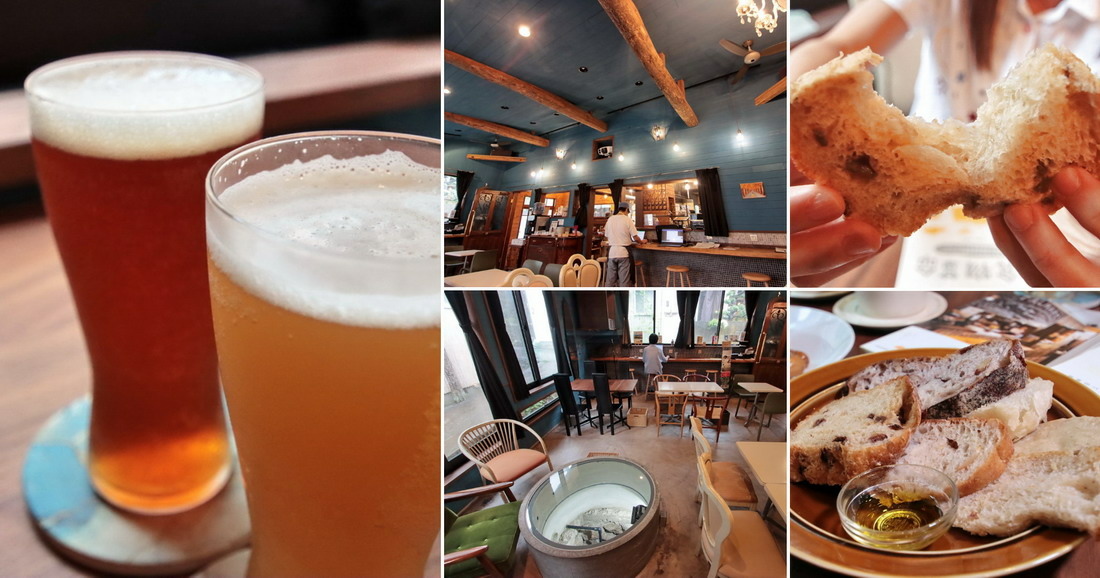
Talmary in Chizu makes six kinds of craft beer brewed with wild yeast. About an 11-minute walk from JR Chizu Station, it also pairs well with a visit to the nearby Ishitani Residence.
Sep
Wed
Tottori, Japan: Talmary Cafe and Bakery | Japan's Only Beer Brewed with Wild Microbes, at an Artsy Café in a Rural Town
#RecommendedFoodInTottoriJapan #TottoriBGradeFood #ChizuBakeryCafe #TalmaryCafeAndBakery #IshitaniResidence #JapansOnlyWildMicrobeCraftBeer
#RealFoodRevolution
#DoNotDrinkAndDrive
#TourTottoriWithToripy
Chizu: Talmary Cafe and Bakery
Address:
594 Chizu, Chizu, Yazu District, Tottori Prefecture
Telephone:
Business hours:
11:00–17:00; closed Tuesdays and Wednesdays during the winter holiday period
Transportation:
Get off at Chizu Station on the JR Inbi Line and walk about 11 minutes
Official website:
https://www.talmary.com/
View Larger Map
On this trip to Tottori, I visited several bakeries that left a very strong impression. They included Kameido, a 120-year-old factory-direct bakery in Tottori City; a bakery in the mountains near the home of Daisen Milk in Hoki,
Kosaji Bakery;
and the subject of this article, Talmary Cafe and Bakery in Chizu, near the nationally designated Important Cultural Property known as the Ishitani Residence.
Talmary Cafe and Bakery in Chizu is a bakery as well as an intensely artsy café and pub. It is a small shop in a residential neighborhood, converted from an old house, yet it holds a distinction unique in all Japan: all six of its house-made craft beers are fermented and brewed with local wild microbes. The yeast used for its 18 kinds of bread is similarly natural yeast cultivated in-house from naturally occurring wild strains. It currently uses four kinds: sake yeast, raisin yeast, levain, and beer yeast. Talmary's distinctive commitment to natural and wild ingredients, together with the space of its small artsy café, makes it especially eye-catching.
▲ The yellow Talmary Cafe and Bakery was converted from an old house and is only a few steps from the Ishitani Residence, a nationally designated Important Cultural Property.
▲ Immediately inside the entrance is the bakery, along with various high-quality products sold on behalf of small farmers. Unfortunately, the takeaway bread had sold out by the time I visited in the afternoon.
▲ Labels on cooking oils, vinegars, soy sauces, and other foods feature phrases such as “naturally brewed” and “pure.”
▲ Black tea, sencha, and other teas grown by nearby small farmers.
Talmary's owners, the husband-and-wife team Itaru Watanabe and Mariko Watanabe, are renowned both in Japan and internationally. Itaru Watanabe has published books including Listen to the Voices of Microbes and The “Decaying Economy” Discovered by a Country Baker. Mariko Watanabe has also published The World of Microorganisms, and the couple write health and wellness columns for Japanese newspapers and media. Itaru Watanabe's The “Decaying Economy” Discovered by a Country Baker was translated into Chinese by Taiwan's China Times Publishing under the title Real Food Revolution and published in 2015.
Both were born in Tokyo and actually opened Talmary in Chiba Prefecture back in 2008. At the time, they made bread with their own natural yeast and domestically grown wheat. To research wild microbes more deeply and pursue locally sourced wild microbes and natural water for cultivating yeast and brewing beer, they moved to Okayama in 2011, then relocated again to their present home in Chizu, Tottori, in 2015. To this day, Talmary insists on making bread and beer using only “local wild microbes × local natural water × naturally cultivated ingredients.”
▲ Talmary owners Itaru Watanabe and Mariko Watanabe. Reproduced from
the official Talmary Cafe and Bakery Facebook page
▲ Itaru Watanabe's book The “Decaying Economy” Discovered by a Country Baker was translated into traditional Chinese by China Times Publishing in 2015 under the title Real Food Revolution. I believe the simplified Chinese edition on the left was published in mainland China.
Decorated in warm wood tones, Talmary Cafe and Bakery is quite spacious. The entrance area is the bakery and also sells various high-quality products on behalf of small farmers; naturally, the owners' books can be bought here too. The main dining area, converted from the home's living room, has blue-gray walls. An intentionally aged design accented with natural wood and floral tile mosaics gives the entire space a strongly artsy character. Besides the couple's published works, the most conspicuous decorations are several enormous wooden speakers in the corner, though the music played in the shop is gentle.
The shop has another unusual feature. A round table in the center of the hall is actually a well several meters deep. The owners covered it with glass and installed a spotlight inside, turning it into one of the café's signature attractions.
▲ An adorable lucky cat carved from natural wood; the longer you look, the more soothing it becomes.
▲ The café's counter seats, with books by Itaru and Mariko Watanabe displayed on the wall. The small counter has plenty of power outlets, making it convenient for laptop users.
▲ This round table in the middle of the hall is actually a well several meters deep.
▲ The light lets you see the bottom of the dried-up well several meters below.
▲ The blue-gray walls are accented with natural-wood furnishings and stained glass, creating an elegant and pleasant atmosphere.
▲ In addition to the main area converted from the living room, a small door on the right side of the photograph leads to private-room-style spaces converted from the former guest rooms.
Opening the menu, you will find the craft beers divided into bottled and draft selections. Bottles average ¥990 each, while a 250 ml glass of draft beer averages ¥800. Six varieties are offered depending on the season, and the café also has a choose-your-own tasting flight of three 150 ml glasses for ¥1,500. There are 18 kinds of bread, four desserts, and light meals such as pizza and sandwiches.
Non-beer beverages include naturally grown coffee, organic teas, and organic banana smoothies. Almost every product sold is all-natural, naturally cultivated, or certified organic.
▲ August 2023 menu.
▲ August 2023 menu.
Talmary's six draft beers range from 3.5% to 4.5% alcohol. Depending on each beer's character and flavor, they use hops, wheat, malt, and other ingredients from different regions, with some advertising organic ingredients. The resulting craft beers range in color from golden to yellow-brown and offer sour, light, and other flavor profiles. What they share is the use of wild-microbe yeast.
That day, we ordered Belgian White, shown at right below, and Red Zone Ale, at left. Both had exceptionally fine bubbles. Golden in color and 3.5% alcohol, the Belgian White is brewed for one year from organic malt grown in Germany, Japanese wheat, wild-microbe yeast, hops, organic coriander, pesticide-free fruit peel, and other ingredients. Available throughout the year, it tastes clean and light with a delightful aroma. Although organic coriander appears among the ingredients, the beer did not taste like cilantro.
The reddish-brown Red Zone Ale, at 4.5% alcohol, is brewed from organic German malt, organic American figs, organic hops, wild yeast derived from figs, and other ingredients. A mild sweetness blends with the bitterness of hops, creating a highly elegant flavor.
Although the takeaway bread at the entrance had sold out by the time we visited, fortunately there was still bread for dining in. We ordered a bread assortment for ¥680, which included slices of six European-style breads with different flavors and a small dish of olive oil. Cream cheese could be added for another ¥300.
The bakery currently offers 18 breads, all advertised as containing no butter, sugar, milk, or eggs. They use only four fundamental ingredients: flour, salt, yeast from wild microbes, and water. The water is natural spring water from Chizu, and the flour is freshly milled, with 30% made from wheat grown nearby. Freshly milled flour has a stronger aroma and gives the finished bread more flavor. As described above, the natural yeast is cultivated in-house from naturally occurring wild strains. Four kinds are currently used: sake yeast, raisin yeast, levain, and beer yeast. When the six breads arrived, some contained nuts or dried fruit, while another was pita pocket bread. They were substantial yet soft and became more fragrant with every chew. Most importantly, all the breads had risen beautifully and pulled into strands when torn apart. They were neither overly sour nor too hard—absolutely excellent.
▲ Bread assortment (¥680), with six differently flavored sliced breads and pita pocket bread.
▲ A bread somewhat like pita.
▲ House-made pickles paired with crisp, additive-free German-style sausage. At ¥750 per serving, it makes excellent food to accompany drinks.
Qi Ge's Food and Travel Exploration Go
Qi Ge's Food and Travel Exploration Go
Qi Ge's Food and Travel Exploration Go posted in
Popular (
International Travel
[Asia] Japan
Source: 齊哥的食旅探go | Original URL: https://paulchi543.pixnet.net/blog/posts/15342233621
Where would you stay for this story?
This is a stay-recommendation demo. Partner links will be enabled after confirmation.
Kaike Onsen and Tottori stays
Choose an onsen inn, city hotel or stay area that fits the article context.