
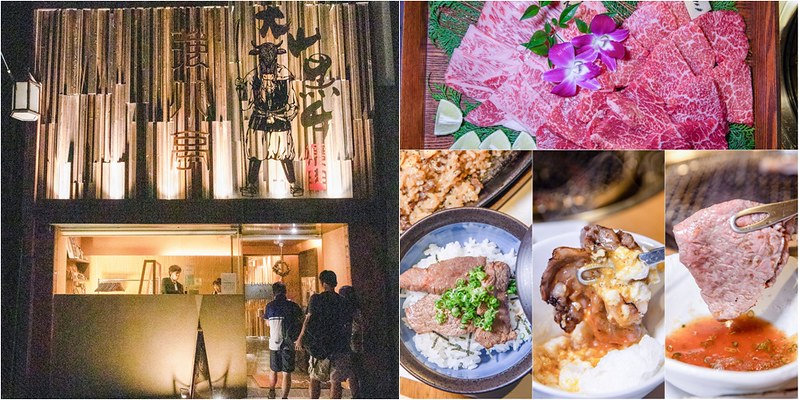
For Daisen Black Beef, keep Michelin-recommended yakiniku restaurant Kyoshotei on your list. It is also one of Tottori's top-rated yakiniku spots on Tabelog.
Daisen Kurogyu-dokoro Kyoshotei (
Official Website
): 1-60-11 Kakubancho, Yonago, Tottori Prefecture; Tel: +81 859-30-2989; Hours: 17:00–23:00 (L.O. 22:00; closed Sundays)
"Tottori actually has Michelin restaurants?" That is usually the first reaction when I tell friends about them. Yes, Tottori not only has Michelin-listed restaurants; it has two two-star restaurants and four one-star restaurants.
Following my previous article about what I guessed might be Japan's cheapest one-star Japanese restaurant, with an 8,000-yen dinner,
Jun,
as well as the only Michelin ramen restaurant in the Sanin-Sanyo region,
Hot Air,
and Michelin-recommended
Ajidokoro Shin,
this is the fourth restaurant I am sharing, and another Michelin yakiniku restaurant I have tried in Japan. It specializes in Daisen Black Beef, which has a thousand-year history, and it is the highest-rated yakiniku restaurant on Tabelog in all of Tottori. After visiting Kitaro in Sakaiminato, Tottori, you can easily come over and give it a try.
Daisen Kurogyu-dokoro Kyoshotei is some distance from Yonago Station. Those who do not feel like walking can take the train to Fujimicho and walk from there, although I think walking directly may actually be faster—assuming you are starting from Yonago Station.
It is embarrassing to admit that, despite considering myself very familiar with Tottori, I had never even heard of Daisen Black Beef. I have always praised Daisen chicken, and Daisen milk is personally my third favorite in Japan. That said, anyone who has researched Tottori or Japanese wagyu has probably heard that Tottori was the first place in Japan to raise wagyu. For example, there was the Ketaka bull, said to be an ancestor of Japanese wagyu and the father of 9,000 offspring. Daisen Black Beef from Tottori likewise has more than a thousand years of history.
Daisen Kurogyu-dokoro Kyoshotei was one of 11 Tottori recommendations in the 2019 Kyoto-Osaka Michelin Guide's Tottori supplement, and it was the only yakiniku restaurant among them.
Tottori Michelin List:
Two Michelin Stars
🔸Kaniyoshi http://www.kaniyoshi.com/
The world's first crab-specialty restaurant to be awarded two Michelin stars.
🔸Mitsuki https://www.facebook.com/pages/%E3%81%BF%E3%81%A4%E3%81%8D/1419382514947642
The owner mainly serves Kyoto cuisine and accepts only one party each day because he does not want guests to be disturbed by other diners. Guests can relax and enjoy their meal.
One Michelin Star
Jun (previously reviewed)
Its dishes draw out the natural flavor of the ingredients and also let diners enjoy the tastes of the season.
Related Review:
[Tottori Michelin Series 2] Jun: Japanese Cuisine Made with Tottori Ingredients—Exquisite Tottori Hair Crab, Mosa Shrimp, and White Squid. The Cheapest One-Star Japanese Restaurant?
🔸Akiyama https://tabelog.com/tottori/A3102/A310201/31004297/
Authentic kaiseki cuisine that emphasizes not only beauty in taste but also visual beauty.
🔸Shusai Kikyoya http://www.kikyouya-yonago.com/
Set-course meals made with local ingredients from the mountains and sea. The owner is a Japanese sake expert, especially in warmed sake, and can recommend a sake to match the food.
🔸Hakushu Suzunoki http://www.suzunoki.tottori.jp/
The owner insists on focusing on traditional Japanese cuisine rather than creative fusion dishes.
Bib Gourmand
🥢Shokushu Totoro https://tabelog.com/tottori/A3101/A310101/31004114/
🥢Soba Kawaguchi https://soba-kawaguchi.gorp.jp/
🥢Tanrei Tori Ramen Hot Air https://www.facebook.com/hotairgo1/
[Japan—Tottori Michelin] Hot Air: Head to a 500-Year-Old Hot-Spring Village in Rural Tottori for Michelin Ramen Made with Local Ingredients, Plus Three Free Footbaths to Enjoy
🍴Fee des Neiges https://www.feedesneiges.jp/
🥢Rengatei http://sp.raqmo.com/rengatei/
🥢Mitakien https://ashidumitakien.jp/
🥢Ajidokoro Shin https://www.ajidokoro-shin.com/ (previously reviewed)
[Japan—Tottori Michelin Series 3] Michelin-Recommended Ajidokoro Shin in Kurayoshi: An Izakaya Serving Bounty from the Sea of Japan, Gifts from the Mountains, and Tottori Regional Cuisine
🥢Sakedokoro Juan https://tabelog.com/tottori/A3103/A310301/31000703/
🥢Sobadokoro Kamidai https://tabelog.com/tottori/A3103/A310301/31000246/
🥢Mingei Kappo Onajimiya http://www.onajimiya.jp/
The restaurant has square and round tables for groups of two to six. Private rooms are also available upstairs, subject to a minimum charge. There are 26 seats on the first floor and 42 on the second.
The menu is quite a large book. I took a photo to give everyone an idea of the prices, and we eventually chose the day's set course.
Seared Beef Sashimi
Nigiri
Grilled Shabu-Shabu
Grilled
Sukiyaki Style
Palate Cleanser
Seasonal Red Salad
Today's Assortment of Three Rare Cuts
Special Gar-
lic Rice
Oxtail Soup
House-Made Dessert
Coffee
7,480 yen (tax included)
Link to More Menu Details
Honestly, this restaurant is not cheap by Tottori yakiniku standards. You can normally eat very well for 3,000 to 4,000 yen, but this is, after all, a Michelin restaurant.
This pork-and-chicken set was ordered for a companion who does not eat beef. It contains six different cuts, all from Daisen and reportedly supplied by the restaurant's own ranch.
The table and condiments include two salts—white Tottori salt and pink rock salt—and two different soy sauces. One contains lemon juice, and the soy sauce is reportedly from Tottori as well.
The a la carte wagyu beef tongue was not extremely thick, but its crisp bite and the sweetness that emerged while chewing were both satisfying. It was delicious.
The seared beef sashimi nigiri is an enormous, thin slice of raw beef that still retains both of the textures described above. It is only lightly seared, drizzled with a little light soy sauce, and placed over a small mound of vinegared rice. Altogether it is very satisfying. The beef is tender and melts in the mouth, with plenty of sweetness but without being too greasy. It is refreshing and delicious.
The grilled sukiyaki-style beef is relatively lean. Although it does not look very fatty, its sweetness is exhilarating. Dip it in a little ponzu and it is outrageously good!
Seared Grilled Shabu-Shabu
Grilled. Many yakiniku restaurants in Japan serve thin slices of beef dipped in raw egg, much like sukiyaki, though honestly I am not usually a fan. Kyoshotei does something interesting and unusual: the raw egg white used for dipping is whipped beforehand.
This thin slice of beef has comparatively more marbling, so it burns very quickly once placed on the grill. I recommend grilling it for only two or three seconds on each side.
The beef is naturally delicious, but the whipped egg white is even more distinctive. Whipping removes the raw egg-white smell on the palate while adding a light, fluffy, melting texture. It is both interesting and delicious.
The seasonal red salad is reportedly made with vegetables from Tottori and a small amount of traditional Kyoto produce. Both the freshness and crispness were satisfying. Two dressings are provided: lemon vinegar and a slightly sweet carrot-based dressing.
The palate cleanser helps reset the flavors and works somewhat like a sorbet. It is made with pomegranate flowers.
Special Gar- (three special rare cuts that change daily).
Kurimi is a cut from the shoulder to the upper foreleg, sometimes described as the center of the foreleg. It is extremely tender, with a texture a little like Korean beef and ample sweetness.
Uchimomo comes from the inner hind thigh. Compared with the previous cut, it has a little more sweetness from the marbling and melts even more readily in the mouth. I loved it!
This is premium loin, yet the marbling is so rich it could almost be kalbi. It nearly melts away as soon as it enters the mouth. Even though the slice has some thickness, after finishing it I wanted to order another portion a la carte. It was absurdly delicious!
Oxtail soup. The beef fried rice or seared steak rice bowl also comes with a bowl of soup.
The soup resembles the beef-bone soup served with Sendai beef tongue set meals. All the sweetness of the onions has been simmered into the broth. It is simple but delicious.
I took a bite of the beef fried rice. It was a little wet and a little salty. I preferred the thick-cut steak rice bowl, although it would have been even better if the pieces of beef were larger, haha. The rice itself was also excellent and used Tottori's Hoshizora Mai variety.
The house-made dessert was blueberry panna cotta, naturally made with Daisen milk. It was fresh, smooth, sweet, and refreshing, while the blueberry jam was mildly tart and richly sweet. So good.
Coffee. In general, about eighty percent of coffee in Tottori is dark roasted, giving it a slight bitterness and a hint of charcoal-roasted aroma.
More Tottori Michelin Restaurants:
Source: 小虎食夢網 | Original URL: https://www.foodtigertw.com/blog/posts/3050640560
Where would you stay for this story?
This is a stay-recommendation demo. Partner links will be enabled after confirmation.
Kaike Onsen and Tottori stays
Choose an onsen inn, city hotel or stay area that fits the article context.