
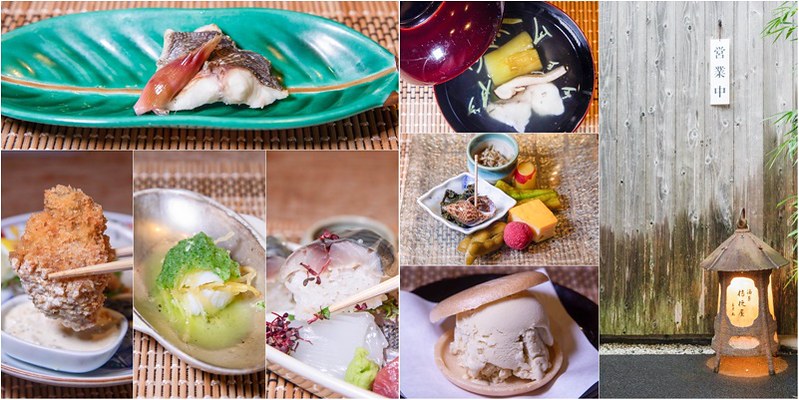
Sakana Kikyoya is a modern izakaya in Yonago that makes good use of Tottori ingredients. Its Michelin-starred dinner is priced at 7,700 yen, making it a strong choice for a food-focused evening.
Shusai Kikyo-ya (
Official website
): 1F, 2-63-2 Kakubancho, Yonago, Tottori Prefecture. Tel: 0859-37-2366. Hours: 6:00–10:30 p.m. (closed Sundays and public holidays)
The “Little Tiger Foodies” autumn-leaves tour of Michelin restaurants in Tottori had just ended, officially marking the next phase of our overseas Michelin trips. After six groups to Macao and one each to Hong Kong, Thailand, and Korea, we had finally begun our journey to collect stars in Japan. You may wonder why I passed over better-known Michelin destinations such as Tokyo, Kyoto-Osaka, and Fukuoka and started in rural Tottori in the Sanin region. First, I naturally prefer the rhythm of rural Japan. Second, Michelin dining in Tottori is unbelievably affordable. For example, the one-star Japanese dinner at
Jun
, which I recently covered, costs only 8,000 yen, while dinner at the one-star restaurant
Akiyama
in Kurayoshi is 10,000 yen. The modern izakaya in Yonago introduced today likewise charges an astonishing 7,700 yen for dinner, including the service fee. That is only about NT$1,700. Anyone who has tried one-star Japanese dining in Taiwan knows how much it normally costs.
Tottori Michelin list:
Two Michelin stars
🔸Kaniyoshi http://www.kaniyoshi.com/
The world’s first crab specialty restaurant to receive two Michelin stars.
🔸Mitsuki https://www.facebook.com/pages/%E3%81%BF%E3%81%A4%E3%81%8D/1419382514947642
The owner specializes in Kyoto cuisine and accepts only one party a day so diners will not be disturbed by other guests and can enjoy their meal at ease.
One Michelin star
Jun (visited)
Its cooking draws out the natural flavor of the ingredients and lets diners enjoy the tastes of each season.
Related review:
[Tottori Michelin Series 2] Jun: Japanese cuisine made with Tottori ingredients, including exquisite Tottori hairy crab, mosa shrimp, and white squid. The least expensive one-star Japanese restaurant?
🔸Akiyama https://tabelog.com/tottori/A3102/A310201/31004297/
Authentic kaiseki cuisine that pursues beauty not only in flavor but also in presentation.
🔸Shusai Kikyo-ya http://www.kikyouya-yonago.com/
Set courses made with local ingredients from the mountains and sea. The owner is a sake expert, particularly knowledgeable about warm sake, and can recommend a pairing for the food.
🔸Hakushu Suzunoki http://www.suzunoki.tottori.jp/
The owner insists on serving traditional Japanese cuisine rather than creative fusion dishes.
Bib Gourmand
🥢Shokushu Totoro https://tabelog.com/tottori/A3101/A310101/31004114/
🥢Soba Kawaguchi https://soba-kawaguchi.gorp.jp/
🥢Tanrei Tori Ramen Hot Air https://www.facebook.com/hotairgo1/
[Japan—Tottori Michelin] Hot Air: Michelin ramen made with local ingredients in a 500-year-old hot-spring village in rural Tottori, plus three free footbaths to enjoy
🍴Fée des Neiges https://www.feedesneiges.jp/
🥢Rengatei http://sp.raqmo.com/rengatei/
🥢Mitakien https://ashidumitakien.jp/
🥢Ajidokoro Shin https://www.ajidokoro-shin.com/ (visited)
[Japan—Tottori Michelin Series 3] Kurayoshi Michelin recommendation, Ajidokoro Shin: bounty from the Sea of Japan, gifts from the mountains, and Tottori regional cuisine at an izakaya
🥢Sakedokoro Juan https://tabelog.com/tottori/A3103/A310301/31000703/
🥢Sobadokoro Kamidai https://tabelog.com/tottori/A3103/A310301/31000246/
🥢Mingei Kappo Onajimiya http://www.onajimiya.jp/
Michelin Plate:
Daisen Kuroushi Kyoshotei (Yonago): https://kyoshotei.com/
[Japan—Tottori Michelin Series 4] Daisen Kuroushi Kyoshotei: Michelin-recommended yakiniku, Tottori’s highest-rated yakiniku restaurant on Tabelog, now so popular it has opened a Tokyo branch
Ajidokoro Misa (Sakaiminato): https://www.sakaiminato-misa.server-shared.com/
[Tottori Michelin Series 5] Michelin Plate restaurant Ajidokoro Misa: an affordable, delicious red snow crab kaiseki lunch for 3,300 yen
Shusai Kikyo-ya
is one of Yonago’s two one-star Michelin restaurants and is near JR Fujimicho Station in Yonago. The other is
Hakushu Suzunoki
, also not far away. I hope we can secure reservations for our food-loving group on the April 2024 Tottori Michelin cherry-blossom tour. We could also check off my highly recommended Michelin Plate restaurant,
Ajidokoro Misa
, and its 3,300-yen crab feast. Amusingly, when we reached the storefront by following the address on Google Maps, we once again found ourselves struggling to locate “
” and “
.” Where exactly was it? Do Tottori’s Michelin restaurants all have to be this discreet? They could stand out a little more.
Fortunately, one group member spotted a ground-level light and a Michelin logo on the wooden wall outside an old-looking timber house, and we finally found the entrance.
When the large door opened, the interior was stylish in a way the exterior was not. It looked like a Japanese restaurant yet was also an izakaya—new and fashionable at once. This kind of izakaya is reportedly becoming popular in Japan and incorporates ideas from formal kaiseki dining. It naturally retains the izakaya tradition of focusing on regional dishes made with seasonal local ingredients, but it also adds a touch of high-end Japanese cuisine. Its approach is entirely different from the traditional Tottori izakaya style of the other Michelin Bib Gourmand restaurant,
Ajidokoro Shin
.
The base price is 7,000 yen, or 7,700 yen including the service fee. When they heard the price, the two senior media figures visiting Tottori’s starred restaurants with me for the first time were stunned. Having been two or three times, I remained perfectly calm. The 7,700-yen course cuts no corners and includes nine dishes even with dessert. There is also a 10,000-yen course, plus a 10 percent service charge. I had actually wanted to go straight for the top option. Even at 10,000 yen, compared with Japanese restaurants in Taiwan, it is explosively inexpensive.
In addition to regional cuisine made with Tottori ingredients, the sake selection also centers on Tottori labels. Familiar names such as Hiokizakura and Bentenmusume were available, so we ordered Hiokizakura, found at almost every izakaya. If I remember correctly, it was 800 yen. Hey, you are a one-star restaurant—you could charge a little more.
The sakizuke appetizer used cherry tomatoes from Nichinan, Tottori. They were peeled in the kaiseki style and slowly simmered in broth. One bite released a burst of juice, while the broth had faint sweetness from kombu and soy sauce. The topping seemed to be seasoned with sesame sauce to draw the flavors together.
The second sakizuke was another surprise. Rural izakaya generally do not pay such close attention to their serving ware, or use tableware of this quality and texture. I do not know whether this came first and earned the Michelin star, or whether the star inspired the presentation, though I suspect the former. The main ingredient was a Tottori scallop topped with grated cucumber. A faint vinegary acidity made it exceptionally refreshing. Strips of citrus peel preserved with sugar were also added. The scallop was tender and juicy, and the cucumber made its finish taste even fresher and sweeter than its opening flavor. A light yuzu fragrance added another clearly defined layer.
Next was the soup course. I used to struggle to understand these seemingly faint soups, even though they are essential to kaiseki. Later, food connoisseurs told me that the stock is the soul of a kaiseki restaurant. Perhaps it was psychological, but I gradually learned to appreciate the delicacy of the soup course. Stocks that appear almost flavorless are usually simmered slowly with kombu and bonito flakes. In autumn, precious matsutake mushrooms may be added for the season, as they were here. The soup held the clean sweetness of kombu, the savory sweetness of fish, and the freshness of matsutake. Each sip produced a deeper, sweeter aftertaste. I suddenly noticed a slight slipperiness and discovered watershield in the bowl. I still do not quite understand this vegetable. Is it meant to replace the traditional starch-thickened texture?
The tsukuri sashimi assortment contained four kinds of fresh Tottori fish, with two or three slices of each, accompanied by ginger and wasabi.
Tottori tuna—yes, Tottori has tuna, and salmon too. Tottori has a long coastline on the Sea of Japan, so there is no reason it should have only its famous crab. On my last visit I encountered its mosa shrimp; this time I tasted delicious Tottori tuna. Even the lean akami that I do not usually favor was quite sweet, and most importantly it lacked the rusty taste I dislike. Delicious.
Tottori white squid has been my greatest seafood surprise over several recent visits, apart from mosa shrimp and Natsuki oysters. It is tender, soft, and sweet, and retains its flavor and texture however small or thin it is cut. Just a touch of salt makes it extraordinarily good.
If you know even a little about the food of Tottori, and Yonago in particular, you have surely heard of Komegozaemonzushi mackerel sushi. It is a century-old institution known to everyone in Yonago, and mackerel sushi is its signature. Two pieces appeared on this sashimi plate: one presented as sashimi, the other made into mackerel sushi. Since Kikyo-ya is in Yonago, why not let the local names enhance each other? Mackerel sushi is indeed a Yonago specialty that many locals have eaten since childhood. I used to dislike mackerel because I found it fishy, especially in sushi. I began to enjoy it after trying it in Fukuoka, and never expected Tottori’s version to be every bit as good. It was almost too delicious.
The next day I rushed to Yonago Station to find it. Sure enough, there was a large, conspicuous sales counter. A Tottori friend later told me that the company once had a dine-in shop at the station, but it closed after the pandemic; now anyone who wants it must buy a whole box at the station. I also discovered that the range was not limited to mackerel. It included my favorite salmon, crab, red trout, and my beloved conger eel. I later bought the mackerel and premium conger eel, and both were excellent. The vinegared rice leaned tart overall, but in a pleasant way. The seafood was fresh and completely free of fishiness. With no preservatives, its shelf life is short. I hope to introduce this century-old Tottori institution properly another time.
The hassun course was interesting. It normally appears near the beginning with the sakizuke, but here it was deliberately placed in the middle. I wonder whether that reflects different izakaya drinking customs. The plate used delicacies from Tottori’s mountains and sea, cooked as traditional regional dishes to express the local flavor. The whelk meat was unexpectedly to my taste. The edamame was extremely soft, while a fish cake that seemed to be made with crab was fluffy and sweet.
The grilled course was fish, something like blackthroat seaperch as I recall. Although described as grilled, the heat was so light and delicate that it left almost no trace. What remained was the toasted aroma of the skin, the sweet fat beneath it, and the juicy tenderness of the flesh. Pickled myoga with a mild acidity sat on top and is apparently another Tottori specialty. See, Tottori has everything. Stop saying it has only sand dunes—you simply do not know the place, haha.
The fried course featured Tottori oysters. They were not my favorite Natsuki oysters, available only from June to July, but they still left a wonderful fragrance on the palate. I never imagined that someone once afraid to eat oysters would come to love them, particularly fried and especially with tartar sauce. After tasting tartar sauce at many Tottori restaurants, I noticed that it is generally more acidic and thinner. When I finished, greed set in and I wondered how incredible this would have been with Natsuki oysters.
Then came another small dish resembling a sakizuke. It could also be called a simmered course, but none of these items appeared on the original menu. The taro inside was wonderfully soft and floury. Daisen’s famous tofu was fried somewhat like the bean curd snacks of Keelung and was also delicious. I do not know how the broth underneath was made; it was sweet and irresistibly moreish.
The final takikomi rice echoed the earlier matsutake soup. I know many people say matsutake tastes and smells best in soup, but I have to say I prefer it in rice like this. It was unbelievably delicious; no matter how full I was, I could have eaten five bowls. The soup made with Tottori red miso was not overly salty and left a mellow miso sweetness.
The last dessert was monaka ice cream. It looked ordinary, but the first bite was outrageously good, with a familiar sweetness that somehow seemed as though it should not be there. The flavor lingered after I finished, and I nearly tried to steal the portion my friend had left. When I asked out of curiosity, I learned that the ice cream inside was astonishingly made from eggplant.
The final tea was roasted green tea. I had expected my beloved matcha, but it was also very good.
Overall, I would not presume to declare just how delicious it was, but I found the unfiltered regional cooking of Tottori and Yonago highly distinctive. Unlike an ordinary izakaya, it inventively incorporates techniques from kaiseki and Japanese fine dining. It feels refined without being expensive: 7,700 yen offers easy access to a Michelin star. Seats are limited, however, so remember to reserve in advance.
More Tottori Michelin articles:
Source: 小虎食夢網 | Original URL: https://www.foodtigertw.com/blog/posts/3050690824
Where would you stay for this story?
This is a stay-recommendation demo. Partner links will be enabled after confirmation.
Kaike Onsen and Tottori stays
Choose an onsen inn, city hotel or stay area that fits the article context.