
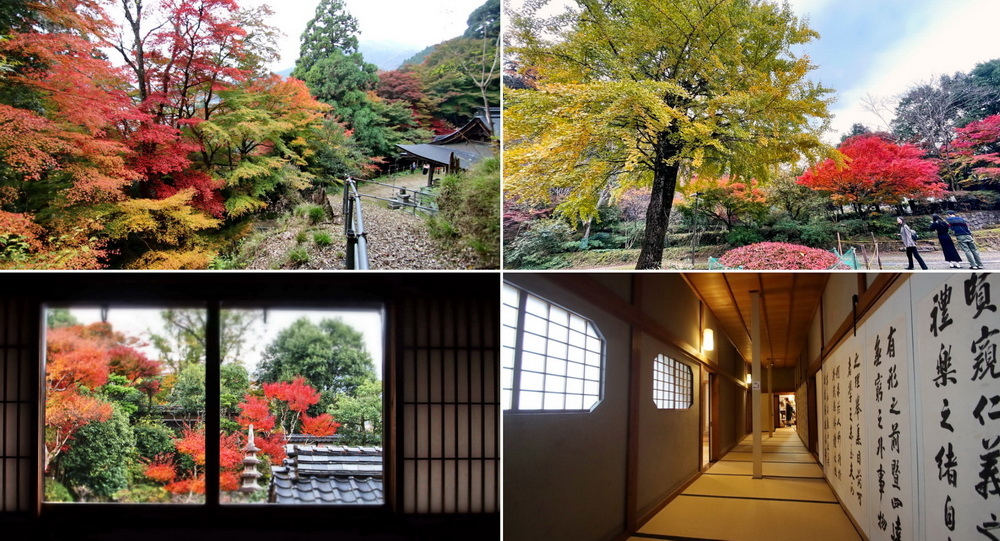
Suwa Shrine and the Ishitani Residence in Chizu-shuku both sit along the Inaba Kaido road, about a 12-minute walk from Chizu Station, making them easy stops for an autumn foliage walk.
Nov
Sat
Tottori, Japan: Autumn Leaves in Chizu Town | Suwa Shrine vs. the Ishitani Residence, Two Highlights of a Taisho-Era Post Town
#TottoriAutumnLeaves #ChizuAutumnLeaves #SuwaShrine #IshitaniResidence
Chizu Town in Tottori is a rustic little mountain town that I like very much. It has a relaxed atmosphere that feels like spending a night in the countryside, with traces of the Showa era everywhere. Take the JR Inbi Line from Tottori Station, and the fastest service will bring you to this place of many accolades in under 30 minutes.
During the Edo period, this was a post town in the Tottori Domain known as Chizu-shuku. The old Inaba Highway and historic buildings from the Taisho and Showa eras remain within the town. Chizu is also Tottori Prefecture's only member of the Association of the Most Beautiful Villages in Japan. Forest covers as much as 93 percent of its area, it has more than 350 years of forestry history, and it is also known as the “Home of Cedar.”
There are many places to visit in this mountain town. Besides
the hidden autumn-leaf retreat of the Itaihara Settlement,
introduced in an earlier article and reminiscent of the movie Wood Job!, the lanes of Chizu conceal
Talmary Cafe and Bakery,
the only place in Japan to brew beer and bake bread using wild fungi. Suwa Shrine, featured in this article, is also one of the six celebrated autumn-leaf destinations in Tottori included each year in the Japan Weather Association's foliage forecast.
▲This straight road is the Inaba Highway that passed through the Tottori Domain in the Edo period. Both Suwa Shrine and the Ishitani Residence featured in this article stand along it. The large walled mansion on the right is the Ishitani Residence.
▲According to local residents, this maple tree opposite the Ishitani Residence is used as an indicator tree. It is the deciduous tree that turns the most beautiful red along the Inaba Highway.
▲Suwa Shrine has two torii gates. This is the first gate at the shrine entrance along the Inaba Highway.
▲Through a gap in the trees beside the torii, we glimpsed the huge ginkgo tree next door at the Ishitani Residence, already turning yellow. It was also a special garden opening day, so we would return to explore it shortly. Photographed November 16, 2024.
Suwa Shrine is 850 meters, or about a 12-minute walk, from JR Chizu Station. It enshrines a divided spirit from its head shrine, Suwa Taisha in Shinshu, Nagano Prefecture. Its exact construction date is unknown, but it is said to date from the Kamakura period 700 or 800 years ago (1185–1333). The entrance stands beside the Ishitani Residence. After passing through the first torii, walk uphill along the approach for about five minutes, then climb a long flight of steps to arrive. Maple trees line both sides of the approach, while many Japanese zelkova trees grow on the mountain behind it. Around mid-November each year, the colorful foliage filling the grounds makes this the shrine's most enchanting season.
However, the autumn colors came late this year, 2024. When we visited on November 16, only about 30 percent of the maples along the approach had changed color—perhaps even less. The final stone staircase to the main sanctuary resembled a “green tunnel,” which made the walk a little disappointing. Yet when we reached the sanctuary, the maple grove behind it took our breath away. A small mountain path continues uphill, with deep green, brilliant yellow, orange-red, and fiery crimson all arrayed before your eyes. This unexpected surprise was captivating.
▲The approach to Suwa Shrine. Mid-November should be when the maples reach their finest red, but when we visited on November 16, 2024, only around 30 percent had changed—perhaps even less.
▲A friend visited the same place in mid-November several years ago, when it was entirely red as shown in the picture. This year's foliage season arrived late.
▲Suwa Shrine in Tottori is not large. The main place of worship in the grounds is this main sanctuary, dedicated chiefly to the deity who pacifies fire.
▲The maples on the approach below the shrine had barely changed, but the area around the main sanctuary was spectacular and displayed every variation of autumn color at once.
Retracing the route from Suwa Shrine brings you to the Ishitani Residence, now designated an Important Cultural Property of Japan. It stands beside the shrine's torii and approach, an imposing, stately Taisho-era building surrounded by high walls.
The Ishitani family moved here from Tottori City in 1691, early in the Genroku era. The building seen today is the result of a ten-year renovation begun in Taisho 8 (1919). The roughly 3,000-tsubo estate contains 40 rooms and elaborate inner and outer gardens. There are seven storehouses just for rice, miso, clothing, forestry tools, and other items. At the time, the main house facing the road operated as a shop under the trade name Shioya, while the family also managed a forestry business.
Although the Ishitani Residence is open to the public, the Ishitani Garden, covering more than 1,300 square meters, opens only on designated days in spring and autumn each year. In the 2024 foliage season, for example, it opened November 8–10 and November 15–17. A separate garden ticket is also required.
Ishitani Residence
Hours: 10:00–17:00; closed Wednesdays
Admission: 600 yen for adults; an additional 200-yen garden ticket is required on special garden opening days
Official website:
https://www.ifs.or.jp/
▲The Ishitani Residence stands midway along the Inaba Highway. This stately, imposing Taisho-era building is enclosed by high walls.
▲The main part of the Ishitani Residence consists of around 20 buildings. This is the two-story main house beyond the front gate.
▲On entering the Ishitani Residence, you first encounter a spacious, impressive earthen-floored hall with a 14-meter-high ceiling. The massive solid beams overhead are pine, combined with large quantities of
Japanese zelkova,
immediately revealing the confidence and prosperity of a forestry proprietor.
▲The Irori Room, covered with tatami and centered on a charcoal hearth, was used for business discussions at the time.
▲There is also a telephone room beside the Irori Room. The Ishitani family had a telephone installed as early as 1923, a century ago.
▲The tatami-covered corridor is decorated with calligraphy on one side, while wooden lattice windows and shoji sliding screens on the other provide both light and privacy.
▲Some corridors inside the house borrow views from the inner garden or bring in light through wooden lattice windows.
▲The inner garden.
▲In some rooms, an engawa veranda lies outside the shoji paper screens, facing the magnificent outer garden.
▲The master's room in the Ishitani Residence. Its tokonoma alcove
includes a taho-style display shelf.
▲The ranma transom on the second floor brings together the artisans' splendid carving skills. This panel depicts the Oki Islands seemingly floating in the Sea of Japan.
▲This ranma transom is carved with Mount Daisen, Tottori Prefecture's great landmark.
▲This is the Edo Reception Room. Originally built in the Edo period, it was remodeled as a shoin-style reception room during the Ansei era. Its wooden lattice windows demonstrate exquisite craftsmanship.
▲There are two staircases to the second floor. The one pictured is Western in style, and a curved taiko bridge above it connects to other rooms.
▲The second floor has three guest rooms, each with windows overlooking the outer garden and its distinctive scenery in every season.
▲View of the outer garden from a second-floor guest room.
Besides the splendid mansion itself, another major feature of the Ishitani Residence is its pond-and-spring garden covering more than 1,300 square meters. The garden had already taken its present form before the Ishitani family renovated the main house in the Taisho era. Its pond, small bridges, and flowing water are surrounded by sculpted pines, maples, cherry trees, plum trees, hydrangeas, azaleas, and more. Rich in Zen atmosphere, it presents different beauty in every season. It was registered as a national Place of Scenic Beauty under the name Ishitani Garden in 2008. Only in December of the following year, 2009, was the Ishitani Residence designated an Important Cultural Property of Japan.
This garden receives a “special opening” for just a few days each spring and autumn. Only during those days may visitors enter the Ishitani Garden and examine its detailed landscaping.
▲Many sculpted pines grow around the pond garden, keeping the outer garden green throughout all four seasons.
▲Autumn maple scenery. The Ishitani Garden opens specially for six days, allowing visitors to walk inside and enjoy the autumn leaves.
▲Personally, I think this enormous ginkgo tree at the innermost end of the Ishitani Garden, close to the driveway entrance by the rear gate, is its most striking autumn sight.
▲A local guide told us that the ginkgo we saw on November 16, 2024, had changed color overnight. It had apparently still been lush green the day before.
▲The maple beside the giant ginkgo was also glowing bright red, with one tree red and the other yellow in a vivid display of the season.
▲The guide in blue at the center of the picture gives visitors a detailed explanation, in Japanese, of the garden's careful design.
For more up-to-date food and travel information, you are welcome to join us:
Source: 齊哥的食旅探go | Original URL: https://paulchi543.pixnet.net/blog/posts/15346953077
Where would you stay for this story?
This is a stay-recommendation demo. Partner links will be enabled after confirmation.
Kaike Onsen and Tottori stays
Choose an onsen inn, city hotel or stay area that fits the article context.