
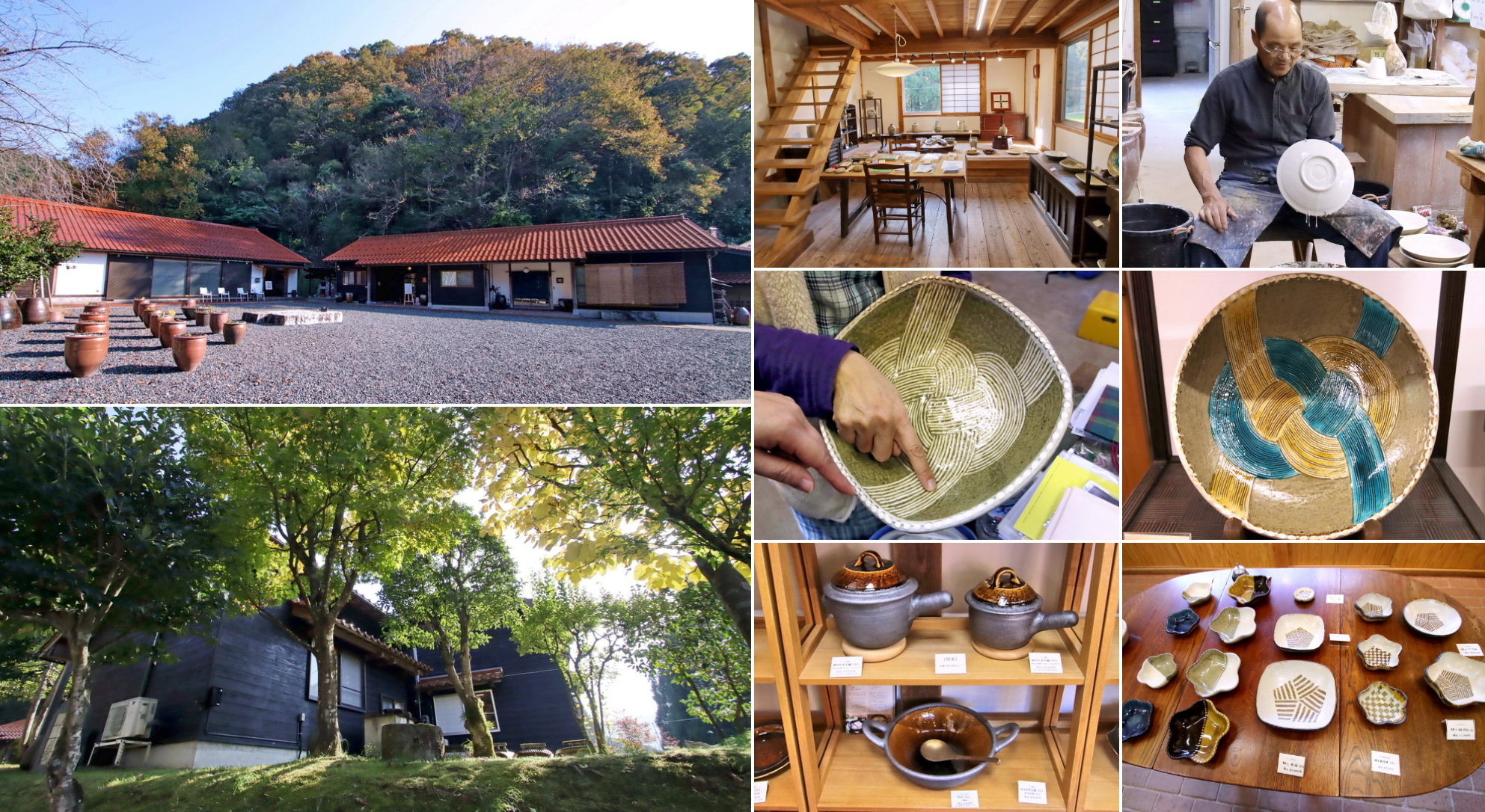
Set in the wooded hills of Iwami, Iwai Kiln is known for Mishima-style everyday pottery and clay pots. After browsing the gallery shop, stop by HANA Kissaten for coffee.
Jan
Sat
Tottori, Japan: Iwai Kiln | A Zen-Inspired Pottery Hiding a Mountain Cafe, Internationally Famous for Mishima Ware and Earthenware Pots
#SaninJapanTravel #RecommendedTottoriAttractions #MustVisitJapanesePottery #IwaiKiln #WabiSabi #JapaneseCraftsmanship #MountainCafe
Iwai Kiln
Address: 134-1 Uji, Iwami Town, Tottori Prefecture
Telephone: +81 857-73-0339
Hours: 10:00–16:00; closed Monday and Tuesday. Hours may be uncertain during the snowy winter season or while exhibiting elsewhere; check Instagram announcements
Transportation: Take the JR San'in Main Line from Tottori Station to Iwami Station. From in front of the station, take bus 32 or 32H toward Iwai Onsen, get off at Choja-ryo Iriguchi, and walk about 900 meters. Alternatively, take a taxi about 4.5 kilometers, or seven minutes, from Iwami Station
View larger map
Iwai Onsen in Iwami Town, Tottori Prefecture, is a small, beautiful hot-spring village that I like very much, full of old-fashioned character. Besides
Iwaiya,
a century-old hot-spring inn belonging to the Japan Association of Secluded Hot Spring Inns, the surrounding area has two pottery studios:
Enkoji Kiln
and Iwai Kiln. If you enjoy Japanese folk craft and pottery for everyday life, especially the Mishima technique, these two kilns are well worth a dedicated visit.
Iwai Kiln feels like a hidden retreat in the mountains. It is about 4.5 kilometers from JR Iwami Station and only around one kilometer by car from the Iwai Onsen district. Farmland and forest surround it, with no other homes nearby. It feels independent and removed from the world, with a quiet, Zen-like wabi-sabi atmosphere.
Enter this pottery built against the mountainside and you find lush green trees, with large ceramic pieces placed here and there. Red-tiled wooden buildings and a climbing kiln surround a broad gravel plaza. In addition to a gallery and shop for ceramic works, there is a Reference Hall housing the kiln owner's collection of Japanese folk crafts, HANA Cafe for coffee and earthenware-pot dishes, and a climbing kiln for firing pottery. Markets, small concerts, and other events are also held from time to time. It is a thoroughly artistic pottery studio.
▲The entrance to Iwai Kiln. Step inside and a whole new world opens up. A large parking lot is located opposite the gate.
▲Cherry trees, maples, and other plants grow at Iwai Kiln. We visited in mid-November, but the maple beside the entrance had not yet turned red.
▲The broad gravel plaza, where markets, small concerts, and other events are occasionally held. The building on the left is the Reference Hall; HANA Cafe is on the right.
▲The building on the right is the ceramic gallery and shop. Iwai Kiln currently opens three spaces to general visitors: the Reference Hall, HANA Cafe, and this gallery.
Iwai Kiln opened in 1971. Its founder, Noriyuki Yamamoto, was born in 1948. As a young man, he was influenced by Shoya Yoshida, father of Tottori Prefecture's folk-craft movement, and Bernard Leach, father of British studio pottery, among others, and decided to pursue pottery. In 1967, at age 18, he began training at Shussai Kiln in neighboring Shimane Prefecture. Four years later, in 1971, Iwai Kiln formally opened, although he did not hold his first public solo exhibition until ten years later in 1981. From then on, Yamamoto gradually built his reputation through repeated solo exhibitions across Japan, and his pottery gained increasing attention. Besides being interviewed by major Japanese media, he published books including Leach-zuki (Loving Leach) and Kurashi o Tezukuri Suru: Tottori, Iwaigama no Utsuwa to Hibi (Handcrafting a Life: The Vessels and Days of Tottori's Iwai Kiln).
When we visited Iwai Kiln, Noriyuki Yamamoto was at work and initially declined an interview, so his daughter received us instead. But once he heard that we were from Taiwan, he not only invited us into his workshop but personally showed us around. The reason was that he likes Taiwan and thinks Taiwanese people are very nice. During the visit, he emphasized several times: “Vessels are made to be used. Only when food is served in them do they realize their true value.”
▲The place where the works are fired. Besides the small kiln pictured, there is a wood-fired climbing kiln behind it.
▲Noriyuki Yamamoto at work, concentrating as he applies glaze to a ceramic piece.
▲Many unfinished pieces in the workshop await firing in the climbing kiln at a high temperature of 1,250°C. These belong to the Scratched Peony series.
▲Finished pieces from the Scratched Peony series.
▲Noriyuki Yamamoto emphasizes: “Vessels are made to be used. Only when food is served in them do they realize their true value.”
Iwai Kiln primarily makes pottery for everyday life, with bowls, plates, cups, and other vessels in every imaginable size and shape. One of its defining features is its skillful use of Mishima ware techniques: intricate designs are carved or stamped into clay bodies before they have fully dried. Iwai Kiln often uses elaborate knot patterns and simple geometric forms, creating a style that is both unpretentious and elegant.
The spacious ceramic gallery and shop displays works not only by Noriyuki Yamamoto himself, but also by his son-in-law and apprentices. Hundreds of different pieces cover tables and shelves, offering so much choice that deciding becomes truly difficult. Some ceramics are accompanied by photographs showing food served in them, demonstrating how they “realize their practical value.”
▲The ceramic gallery and shop is divided into several rooms, with spacious interiors and an extensive selection.
▲Iwai Kiln's Mishima ware commonly features elaborate knot patterns and simple geometric shapes. Circular patterns are also stamped around the rim of this ceramic plate.
▲Ceramics made with the Mishima technique are generally not inexpensive; this one is relatively affordable.
Among the many ceramics at Iwai Kiln, Noriyuki Yamamoto's earthenware-pot series draws particular attention. It includes deep and shallow pots as well as round, wide-mouthed, straight-sided, handled, and handleless forms. The natural clay comes from the Iga region of Mie Prefecture. Rich in iron and other minerals, it develops unique colors and textures during high-temperature firing. Every pot has a matte black-gray exterior with a cast-iron-like texture and a glossy yellow-brown interior. The forms are simple and substantial, and every pot can be used directly over a flame. This series is extremely popular with Japanese customers, while international buyers also travel to the pottery specifically to purchase it.
Yamamoto told us that the earthenware-pot series is never sold online and can only be purchased at Iwai Kiln because he cannot produce such large quantities. He also said an overseas buyer once wanted to purchase 300 pots at once, but he refused. Each pot takes a long time to make, and if one customer bought so many, even fewer would remain for everyone else.
▲Iwai Kiln's earthenware-pot series is beloved by Japanese consumers and has been featured in major Japanese magazines.
▲The earthenware-pot series also includes small milk pans like this one, which can likewise be placed directly over a flame.
▲If you cannot afford or carry home a large piece, there are also many small items of everyday pottery to choose from.
▲Admission to Iwai Kiln's Reference Hall costs 300 yen. It contains ceramics, designer chairs, and other pieces collected by Noriyuki Yamamoto, including many works by Japanese Living National Treasures.
HANA Cafe at Iwai Kiln is run by Noriyuki Yamamoto's wife and daughter. In its warm interior of solid-wood floors and furniture, guests sit on designer chairs from Yamamoto's collection, while every vessel used for food and drinks was fired in-house. The books on the nearby shelf, free for guests to browse, all concern ceramics, daily living, gardening, and related subjects. This small space offers a concentrated taste of the owner's everyday life.
If you visit Iwai Kiln but cannot afford a cup set starting at 10,000 yen, consider spending around 500 yen on tea or coffee here instead. Every cup set they use is valuable, and the drink comes with a small homemade treat prepared by the hostess. The cafe also serves earthenware-pot dishes, light meals, and desserts. A menu is provided at the bottom of the page for interested visitors.
▲HANA Cafe.
▲A wood-fired oven stands beside the cafe entrance. We initially thought it was for firing ceramics, but the hostess explained that it is used exclusively for baking bread, pizza, and other food.
▲The cafe entrance is decorated with country-style displays.
▲Inside the cafe, every chair is a designer piece from Noriyuki Yamamoto's collection, and they are changed frequently. The hostess said this was because Yamamoto had collected far too many of them, with just a hint of complaint in her voice.
▲Black coffee costs 550 yen a cup, but the cup set starts at 11,000 yen. It also comes with the homemade treat shown below.
▲An earthenware-pot lid can also be used as a plate, suitable for serving dishes or small treats.
For more up-to-date food and travel information, you are welcome to join us:
Source: 齊哥的食旅探go | Original URL: https://paulchi543.pixnet.net/blog/posts/15347064077
Where would you stay for this story?
This is a stay-recommendation demo. Partner links will be enabled after confirmation.
Kaike Onsen and Tottori stays
Choose an onsen inn, city hotel or stay area that fits the article context.