
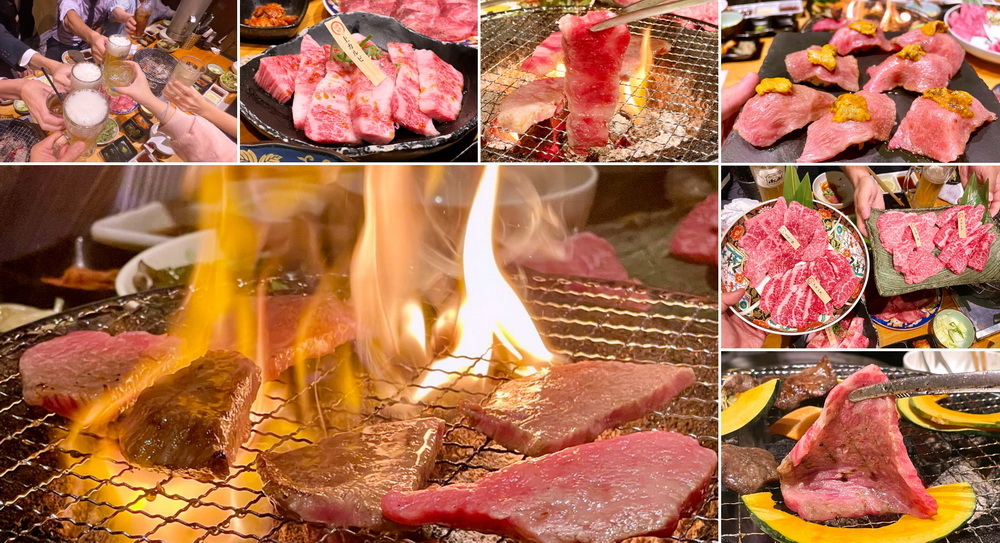
Yakiniku Sumizo Furuumi specializes in Tottori Wagyu with an oleic acid content of about 55%. Try everything from marbled short rib and beef tongue to rare cuts.
Jan
Wed
Tottori, Japan: Sumikura Yakiniku Furumi Branch | Tottori Wagyu “Oleic Acid 55”: Enjoy Marbled Short Ribs, Beef Tongue, and Rare Cuts by the Mouthful
#MustEatTottoriFood #TottoriBeef #RecommendedTottoriCityWagyuYakiniku #OleicAcid55 #Olein55 #SumikuraYakinikuFurumi
Tottori City: Sumikura Yakiniku Furumi Branch
Address: 618-1 Furumi, Tottori City, Tottori Prefecture
Phone: +81 857-30-7029
Hours: 11:30 a.m.–2:00 p.m. and 5:00–11:00 p.m.
View larger map
Before feasting on yakiniku, let us first learn what distinguishes Tottori Wagyu. Japan's first wagyu sire was Ketaka, produced in Tottori Prefecture. Today's Tottori Wagyu bloodlines were all developed around Ketaka. Their defining characteristic is “Olein 55,” meaning that oleic acid makes up about 55% of the fat in the beef, producing beautiful, evenly distributed marbling. Oleic acid is a monounsaturated fatty acid; the more it contains, the softer the beef and the better the aroma and flavor of its fat. Wagyu meeting the “Olein 55” standard slowly melts at a room temperature of about 16°C and has slightly less cholesterol than ordinary wagyu. Besides its tender texture and rich beef aroma, it is also more readily absorbed and metabolized by the body.
Tottori Wagyu has repeatedly won honors at the National Wagyu Ability Expo, known as the Olympics of Japan's wagyu industry and held once every five years, further establishing its elite status. Most recently, it ranked first in Japan for meat quality in 2017.
▲ Sumikura Yakiniku has two separate locations in Tottori City, both about 1.8 kilometers from Tottori Station. This is the Furumi branch.
▲ The entrance to Sumikura's Furumi branch.
▲ A sign seen at many yakiniku restaurants in Tottori: “Tottori Wagyu, Number One in Japan.”
▲ As soon as you enter the restaurant, a refrigerated display beside the entrance reveals a dazzling array of Tottori beef, along with various certificates of recognition.
▲ Sumikura's Furumi branch has attracted many Japanese celebrities. Roughly 70 to 80 autograph boards cover the wall, demonstrating just how famous it is.
▲ The restaurant is filled with Japanese atmosphere. Wooden décor and warm lighting create a comfortable, elegant dining space.
▲ This is the standard seating area. Seats screened by bamboo blinds and private rooms are also available.
▲ The private-room area.
▲ Orders are placed on tablets, and printed menus are also provided. Here are parts of the menu. A detailed menu is available on the official website,
which you can view through this link.
▲ When in Rome, do as the Romans do: we began with a toast and then started eating.
▲ Sumikura provides four yakiniku sauces: wasabi soy sauce, lemon ponzu, and two house-blended yakiniku sauces made with fruity Twentieth Century pears grown in Tottori Prefecture.
Sumikura offers an extensive yakiniku selection. In addition to familiar cuts such as karubi short ribs and rosu loin, beef tongue, and offal, it has more than ten rare cuts. The menu also includes steaks, beef sushi, wagyu shabu-shabu, and more. Beef tongue alone comes in six varieties, including thick-cut, thin-cut, miso, and salted green onion.
Our first dish was the basic tan-shio salted beef tongue (980 yen per serving; the photo below shows two servings). The thin slices of tongue were large and covered with snowflake-like marbling. Grilled to medium or medium-well, they were soft and tender yet crisp and springy, with the smoky aroma of charcoal—explosively delicious. Although already seasoned, a touch of mild yakiniku sauce added even more flavor.
The must-order premium Tottori Wagyu jo-karubi short ribs (1,180 yen per serving; the photo shows two servings) were pink, covered in delicate marbling, and cut satisfyingly thick. Just looking at them made our mouths water. Compared with standard karubi (940 yen per serving), the premium version has more evenly distributed fat, more pronounced marbling, and finer, more tender meat.
After the richly marbled slices were placed on the grill and turned a few times, a wonderful sizzling sound immediately began. Dripping fat made the charcoal flare repeatedly, filling the private room with the aroma of beef. The meat was extraordinarily tender, and every slice was thick and large, making each bite overwhelmingly satisfying.
Next, we sampled the rare tomosankaku tri-tip (1,430 yen per serving; the plate in the photo contains two servings) and flank (1,290 yen per serving; the plate in the photo also contains two servings).
The rare tomosankaku tri-tip comes from near the junction of the thigh and rump. Because this area gets relatively little exercise, the meat is finer in texture while retaining natural resilience. It combines beautiful marbling with tenderness.
Although richly marbled, this cut is not greasy. It offers both the softness of marbled fat and the springiness and chew of lean meat, creating remarkably layered textures.
The flank is outer belly meat near the abdomen, connected to the kainomi flap. Its marbling resembles bamboo leaves, so in Japan it is also called sasanishi, or sasami. It combines the tender texture of premium karubi with relatively sparse, evenly distributed fat, so several pieces can be eaten without becoming cloying.
Although the flank contained less fat than the premium karubi, it caused a dramatic flare-up while we grilled it. We wanted it medium-rare, but it ended up medium-well... Even overcooked, it still delivered the deep sweetness characteristic of belly meat and a wealth of texture without feeling excessively greasy. For anyone who loves yakiniku but cannot tolerate too much fat, flank is undoubtedly a perfect choice.
Zabuton (1,430 yen; the photo shows two servings) takes its name from the Japanese word for a floor cushion and is another rare wagyu cut. Located beneath the shoulder blade, between the back and shoulder, only about three kilograms can be obtained from each animal. Here, fat and lean meat combine perfectly, with almost no perceptible fibers in the mouth. Some restaurants serve zabuton as their highest-grade shoulder loin, or tokujo rosu.
The thin slices had evenly distributed, snowflake-like marbling and a relatively high fat content. Grilled to medium-rare and dipped in raw egg yolk, the delicate marbling produced a silky, tender texture that melted in the mouth—an exceptionally luxurious pleasure.
Besides serving the rare zabuton cut for grilling, the restaurant pairs it with sea urchin to make uniku sushi (520 yen for one piece or 1,480 yen for three).
Seared until rare or medium-rare, a slice of zabuton wraps rice infused with its juices and is topped with a spoonful of sea urchin. Just looking at it is a pleasure. In the mouth, the soft, fragrant wagyu fat blends perfectly with the smooth, fresh sweetness of sea urchin, creating a rich, mellow surf-and-turf experience that melts away. This piece of sushi is extraordinarily indulgent.
Sumikura offers about six types of horumon offal. That day we ordered paipu, roughly cut beef small intestine (780 yen per serving), and minosando, beef rumen (780 yen per serving). After eating so much tender wagyu, it was a pleasant change of texture to enjoy offal that was fragrant and crisp outside yet springy within.
For more up-to-date food and travel information, you are welcome to join:
Source: 齊哥的食旅探go | Original URL: https://paulchi543.pixnet.net/blog/posts/15347082497
Where would you stay for this story?
This is a stay-recommendation demo. Partner links will be enabled after confirmation.
Kaike Onsen and Tottori stays
Choose an onsen inn, city hotel or stay area that fits the article context.