
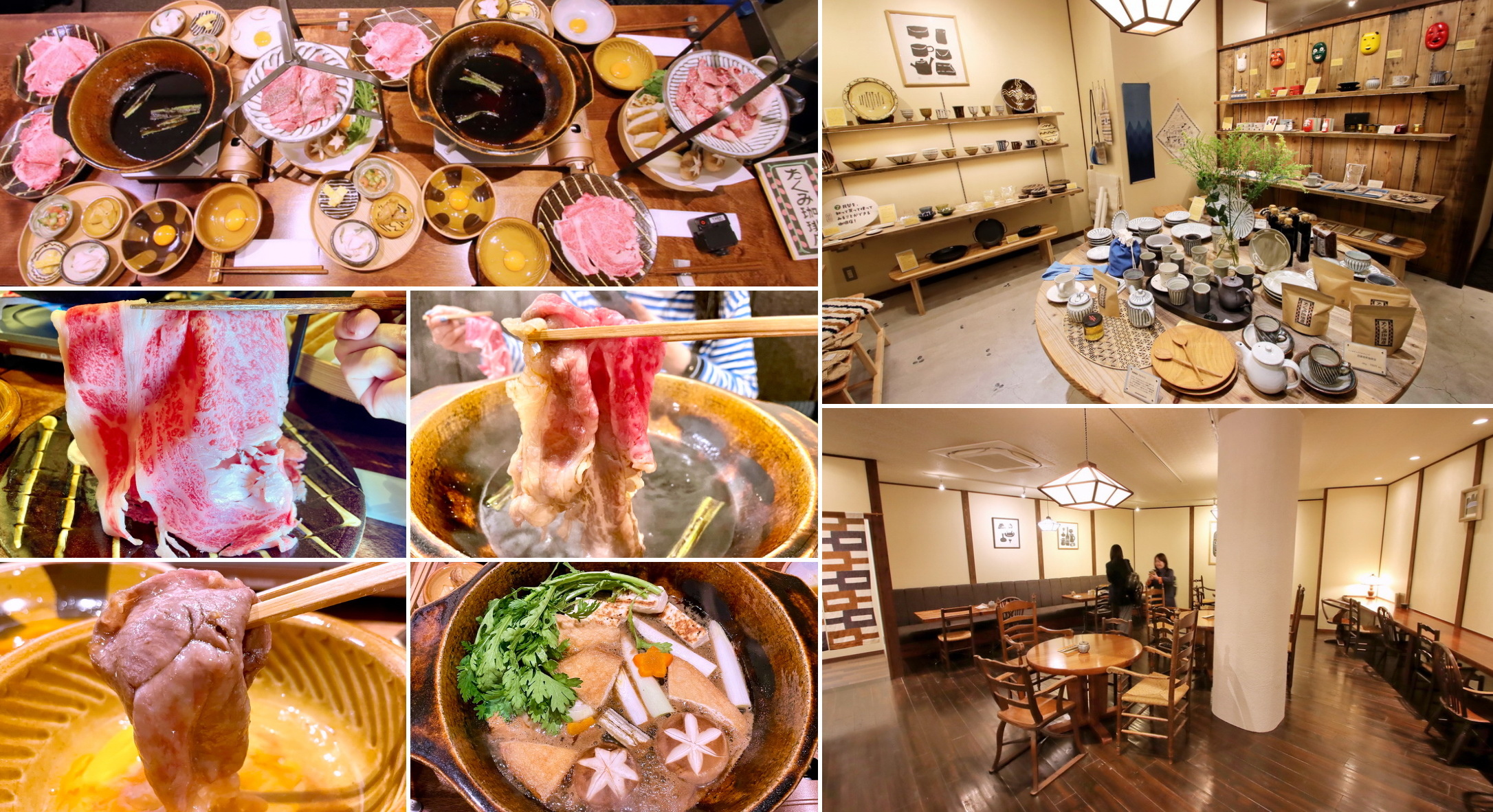
About a 5-minute walk from Tottori Station, Takumi lets you enjoy coffee served in mingei tableware by day and Manyo Beef sukiyaki at dinner.
Jan
Thu
Tottori, Japan: Takumi Coffee | Japanese Folk Craft Meets a Wabi-Sabi Café, Turning into a Tottori Wagyu Sukiyaki Restaurant at Dinner
#MustEatTottoriFood #TottoriWagyu #ManyoBeef #RecommendedRestaurantsAndCafesNearTottoriStation #OleicAcid55 #TenbiranEggs #TakumiCafe #TakumiCoffee #MenuIncluded
Tottori City: Takumi Coffee
Address: 1F Marumo Building, 606 Sakaemachi, Tottori City, Tottori Prefecture
Telephone: +81 857 51 1178
Hours: 11:00–21:30; closed Tuesdays
Note: Tottori wagyu shabu-shabu is available only during dinner hours.
View a larger map
About a five-minute walk from JR Tottori Station, Takumi Coffee is a wabi-sabi-style café opened in March 2024 by Tottori’s renowned Oenosato Nature Farm, known for one of Japan’s three best pancakes in an online poll and for its high-quality Tenbiran eggs. What makes it especially unusual is that at night it transforms into a sukiyaki restaurant serving Tottori wagyu, specifically Manyo Beef.
The restaurant’s greatest distinction is its emphasis on “the beauty of vessels” and its mission to bring Japanese folk craft into everyday life. It works with kilns in Tottori and the neighboring prefectures of Shimane and Hyogo to source the plates, bowls, cups, earthenware pots, and other tableware used inside. Beyond using these pieces, it has created a prominent display and sales area at the café entrance to promote Japanese folk craft, including household pottery and goods from Tottori’s Nakai-gama, Yamane-gama, and Kokuzo-yaki; Shimane’s Shussai-gama and Yunotsu-gama; and Hyogo’s Yasutoshi-gama and Tanso-gama.
Takumi Coffee is actually located on Nishiki-dori, Tottori City’s folk-craft avenue, also known as Mingeikan-dori. Nearby are the similarly named Takumi Kappo Restaurant and Takumi Craft Shop, as well as the Tottori Folk Crafts Museum, gallery shop SORA, and other shops and museums that celebrate the beauty of vessels. Anyone who enjoys Japanese folk craft should consider visiting all of them on the same itinerary.
▲ Seen from outside, Takumi Coffee looks like an art and craft shop. Without its sign and the coffee roaster beside it, you would hardly imagine it was a café.
▲ Just inside the café is not a seating area but a folk-craft display and shop featuring wabi-sabi household pottery, lifestyle goods, and other pieces from Tottori, Shimane, and Hyogo.
Walk through the folk-craft retail area at the entrance and the café seating finally appears. The spacious, dimly lit interior is finished in warm wood tones and has the cozy elegance associated with a Japanese coffeehouse. Most notably, every chair is either a celebrated design or an antique from the world of Japanese folk craft. The owners are remarkably generous in realizing their goal of bringing Japanese folk craft into everyday life.
The most distinctive feature is that this attractive, atmospheric café by day transforms during dinner hours, from 17:00 to 21:30, into a Tottori wagyu sukiyaki restaurant that also serves a variety of alcoholic drinks. Of course, guests who simply want a cup of coffee in the evening can still order one.
▲ Every chair used in the café is a celebrated or antique piece from the world of Japanese folk craft, fully embodying the idea of bringing Japanese folk craft into everyday life.
▲ The menu at Takumi Coffee.
Three sukiyaki options are available at dinner from 17:00 to 21:30: premium Tottori wagyu for 3,980 yen, special select for 5,980 yen, and supreme select for 7,980 yen. Each includes two cuts of meat. All photos below show the 5,980-yen special-select course. Our special-select sukiyaki included Tottori-raised Manyo Beef chuck roll
and foreleg meat, along with four small side dishes, a raw Tenbiran egg, vegetables from local small farms, tofu, a Tenbiran egg rice bowl, coffee, dessert, and more.
Among Tottori wagyu, Manyo Beef is a celebrated brand known for its extremely strict raising standards and exquisite flavor. The requirements encompass clean air, high-quality water, and fertile land, as well as the proportions of rice, wheat bran, and other ingredients mixed into the feed. The cattle are also raised slightly longer than ordinary wagyu, allowing the fat to spread more evenly, producing more beautiful marbling and a finer texture.
▲ At dinner, one sukiyaki pot is shared by two people. The earthenware pot used here was made by
Iwai-gama
in Iwami, Tottori.
▲ All three sukiyaki courses include four small homemade side dishes using produce from local small farms, plus a raw Tenbiran egg.
▲ All three sukiyaki options include the foreleg meat shown here. This plate was not labeled as Manyo Beef.
▲ This plate from the 5,980-yen special-select course contains Tottori-raised Manyo Beef chuck roll.
We had reserved before our visit, so when the four of us sat down, the table was already set with two large earthenware pots, each shared by two people, along with four small side dishes and raw Tenbiran eggs. Two large pitchers held the sukiyaki seasonings: warishita sukiyaki sauce and kombu stock, which diners could add to suit their preferred strength and flavor. I realized that the earthenware pot used here was a popular item from
Iwai-gama
in Iwami, which we had visited during the past few days. I regretted not buying one, but at least I got to use it here.
Once the stock came to a boil, we first added the Manyo Beef chuck roll I most wanted to try.
Although thinly sliced, each piece was large, with about three or four pieces of varying sizes on a plate. We swished a slice in the pot for a few seconds, dipped it in a rich Tenbiran egg safe to eat raw, and took a bite. The savory-sweet sukiyaki broth, which was not overly sweet, highlighted the fragrance of the beef fat. The Tenbiran egg made the tender meat even silkier and more delicate. It was a perfect match and absolutely delicious.
▲ The sukiyaki comes with warishita cooking sauce and kombu stock, so you can adjust the intensity to taste. We poured in almost the entire pitcher of kombu stock.
▲ The beautifully marbled Manyo Beef chuck roll was irresistibly appealing. Each slice was thin but enormous, making it deeply satisfying.
▲ Swish a slice in the pot for just a few seconds and the marbled fat quickly melts in the heat, creating a silky texture that dissolves in the mouth.
▲ Dipping the meat in Tenbiran egg makes the tender beef even silkier and more delicate. The slice was so large that half of it did not get cooked, but it was safe to eat raw anyway.
The photos below show the foreleg meat. Because the forelegs move frequently, their muscles are more developed. The marbling is still attractive, but the cut has more lean meat than the chuck roll. Briefly swished in the pot, it is smooth and tender yet firm and springy, and it tastes quite good. In terms of eating order, however, we should have cooked this plate first.
▲ The foreleg meat also has beautiful marbling, although there is more lean meat toward the end.
▲ The medium-rare foreleg meat is likewise dipped in Tenbiran egg. It is smooth and tender, with a firm, springy bite.
▲ After the meat, add the vegetables, sections of long green onion, tofu, and fried tofu to the pot for a light, refreshing change of pace.
▲ The course’s staple dish is a Tenbiran egg rice bowl sprinkled with mitsuba. Its sauce is the same savory-sweet warishita used for the sukiyaki. Tenbiran egg and Tottori rice are a perfect match, and the accompanying pickles are delicious too.
▲ Coffee and ice cream after the meal. I had been so busy eating earlier, but now I noticed the tableware. A cup of coffee lets you appreciate the beauty of vessels.
▲ Vanilla ice cream sprinkled with kinako soybean flour. Yummy, yummy.
For more up-to-date food and travel information, you are welcome to join:
Source: 齊哥的食旅探go | Original URL: https://paulchi543.pixnet.net/blog/posts/15347088705
Where would you stay for this story?
This is a stay-recommendation demo. Partner links will be enabled after confirmation.
Kaike Onsen and Tottori stays
Choose an onsen inn, city hotel or stay area that fits the article context.