
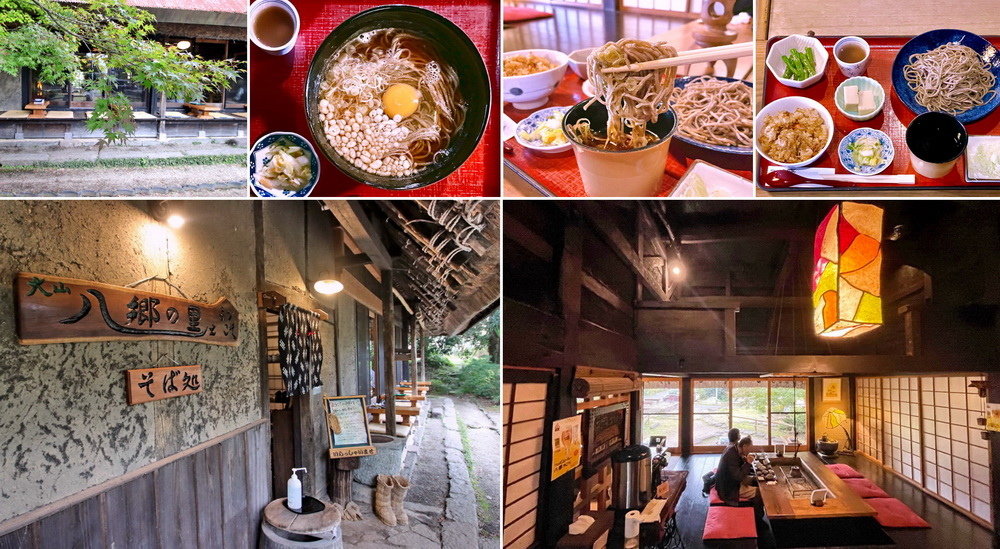
At the foot of Mount Daisen, Yasato no Sato sits amid rural fields and preserves a deep countryside atmosphere with a century-old thatched farmhouse, an irori hearth and hachiwari soba.
Jan
Thu
Tottori, Japan: Daisen Soba Yago no Sato | Soba in a Traditional Farmhouse Amid the Fields, with a Thatched Roof, Irori Hearth Seating, and Deep Nostalgia
#MustEatFoodinHokiTottori #MountDaisenTottori #DaisenSobaYagonoSato #DaisenSobaYagonoSato #Soba #ThatchedRoof #IroriHearth
Daisen Soba Yago no Sato
Address: 135 Fukuokahara, Hoki, Saihaku District, Tottori Prefecture
Tel: 0859-68-4331
Hours: 11:00–14:00; closed Wednesdays
Note: The restaurant does not accept table reservations, so everyone must queue to enter. However, you need to call ahead and leave your name to reserve the number of servings of soba you want, so they do not sell out before you eat.
View larger map
Located at the foot of Mount Daisen in Hoki, near the
Shoji Ueda Museum of Photography,
Daisen Soba Yago no Sato is an extremely popular soba restaurant in an old Japanese house hidden deep in a rural village surrounded entirely by rice fields. Its various hot and cold bowls of 80-percent buckwheat soba—made with eight parts buckwheat to two parts wheat flour—along with dipping soba, moon-viewing soba, and grated-yam soba are delicious. The nostalgic interior, reminiscent of Japan's Showa era, is another major attraction.
Yago no Sato occupies a century-old thatched house converted into a restaurant, an old building with a natural timber frame. Its weathered bamboo-lath-and-mud walls and wooden engawa veranda remain intact. A small channel of clear water runs before the entrance, and a sizable Japanese garden surrounds the house. The moment you step inside, a powerful sense of the countryside greets you. Two cats wander and sleep throughout the garden, becoming an unexpected highlight of a visit to Yago no Sato.
▲ At first glance, the old house has a conspicuous corrugated-metal roof, rusted and patched like a piece of patchwork. Beneath the metal, however, lies a traditional thatched roof.
▲ The old house's engawa has been arranged as a waiting area with cushions and low tables—or as a photo spot, since it has so much character. Books and a Reversi board sit on the tables to help guests pass the wait.
▲ The mottled bamboo-lath-and-mud walls record the passage of time. A pair of straw sandals once worn for farm work stands at the entrance, and everything is steeped in the flavors of an earlier age.
▲ Inside the corrugated-metal roof is the original thatch. As times changed, many old houses in Japan also began using metal roofing.
▲ The restaurant keeps two cats, one black and one patterned. They wander inside and out and sleep wherever they please, making them the most relaxed little employees.
Entering the farmhouse, you first encounter a fairly spacious doma, an area in early Japanese homes with a floor of packed earth that acted as a transition where people removed their shoes before stepping into the living space. The doma is lit by dim yellow light, and its earth floor has been polished to a shine by countless footsteps. Rural objects from the Showa era are displayed here, along with small crafts for sale. I also noticed that the cashier's counter had been converted from an old sewing machine. An equally nostalgic kitchen stands at the back of the doma, filling the entire space with the atmosphere of early country life.
Guests remove their shoes here and slide open a paper door. Beyond it lies a dining room fitted with an irori hearth and hanging washi-paper lanterns, creating a striking contrast with the doma.
▲ Handwritten words carry a special warmth: “Please spend a relaxing time amid the nostalgic country atmosphere and the natural world.”
▲ The cashier's counter in the doma was converted from an old sewing machine. Small crafts are displayed for sale in bamboo baskets on both sides.
▲ The patterned cat that was sleeping on the engawa earlier has come to patrol the doma.
▲ Slide open the paper door in the doma and the dining room beyond reveals a world of its own.
The high-ceilinged interior uses dark brown wood throughout, with the natural timber roof frame, beams, and columns deliberately left exposed. Dark brown floors, beams, and posts are paired with white paper doors and noren dividers. Light enters from the outdoor garden through broad floor-to-ceiling windows and also comes from colorful washi pendant lamps and stained-glass table lamps. The result is rich in old-world character, simple yet refined.
The most eye-catching features in the seating area are two long wooden tables fitted with irori hearths. Diners can enjoy their food while experiencing a scene from everyday life in the Showa era. Tables and specific seats cannot be reserved, however, so eating around this welcoming hearth depends entirely on luck.
▲ It must be said that the layout, lighting, and overall color palette create an exceptionally atmospheric dining experience.
▲ Nearly all the restaurant's seating consists of Japanese-style floor cushions. This is the only area with chairs.
▲ The restaurant menu. Besides two soba set meals, there are à la carte items. The individual dishes also include a side dish, pickles, and a sweet soup.
▲ This is the soft drink and alcoholic beverage menu.
Yago no Sato offers about six kinds of handmade soba, two of which are set meals combining rice and noodles. The noodles use buckwheat grown at the foot of Mount Daisen and are made with the hikigurumi method, using whole buckwheat flour with the husks still included. The ratio is 80 percent buckwheat—eight parts buckwheat to two parts wheat flour. This proportion preserves the grain's rich aroma and chew while also giving the noodles a resilient bite.
The four of us had the marinated egg yolk rice and soba set (tsuke tamago meshi set, ¥1,200), the Daisen sticky rice and soba set (okowa set, ¥1,200), and two individual dishes: grated-yam soba (tororo soba, ¥900) and raw-egg soba (tsukimi soba, ¥900).
▲ Daisen sticky rice and soba set (okowa set, ¥1,200). Every set meal comes with one plate of pickles, two side dishes, and a sweet soup.
▲ Marinated egg yolk rice and soba set (tsuke tamago meshi set, ¥1,200). The egg yolk is soaked overnight in soba broth seasoned with soy sauce, sugar, and mirin, then placed on piping-hot rice.
▲ Raw-egg soba (tsukimi soba, ¥900). Each individual soba dish comes with one plate of pickles, one side dish, and a sweet soup.
▲ Grated-yam soba (tororo soba, ¥900), likewise served with pickles, a side dish, and sweet soup. This is a dry noodle preparation; a version in hot broth is also available.
That day I had Daisen sticky rice with cold soba. I dipped the noodles into a savory sauce with a touch of sweetness, adding chopped green onions and wasabi before eating. The 80-percent buckwheat noodles had a firm, resilient chew and a full soba aroma. The dipping sauce was not overly seasoned, and the dish was delicious.
Daisen okowa looks a little like kamameshi at first glance, but it is a local dish from western Tottori: steamed glutinous rice. Its main ingredient is sticky rice grown at the foot of Mount Daisen. Diced chicken, shredded yam, carrots, and other ingredients are mixed with soba broth seasoned with mirin, soy sauce, sugar, and more, then cooked together. The result is soft, glutinous, fragrant, and faintly sweet, and it pairs exceptionally well with soba.
▲ My friend's tsukimi soba. The raw egg gave the noodles a silky mouthfeel and richer layers of flavor.
For more up-to-date food and travel information, you are welcome to join:
Source: 齊哥的食旅探go | Original URL: https://paulchi543.pixnet.net/blog/posts/15347094821
Where would you stay for this story?
This is a stay-recommendation demo. Partner links will be enabled after confirmation.
Kaike Onsen and Tottori stays
Choose an onsen inn, city hotel or stay area that fits the article context.