
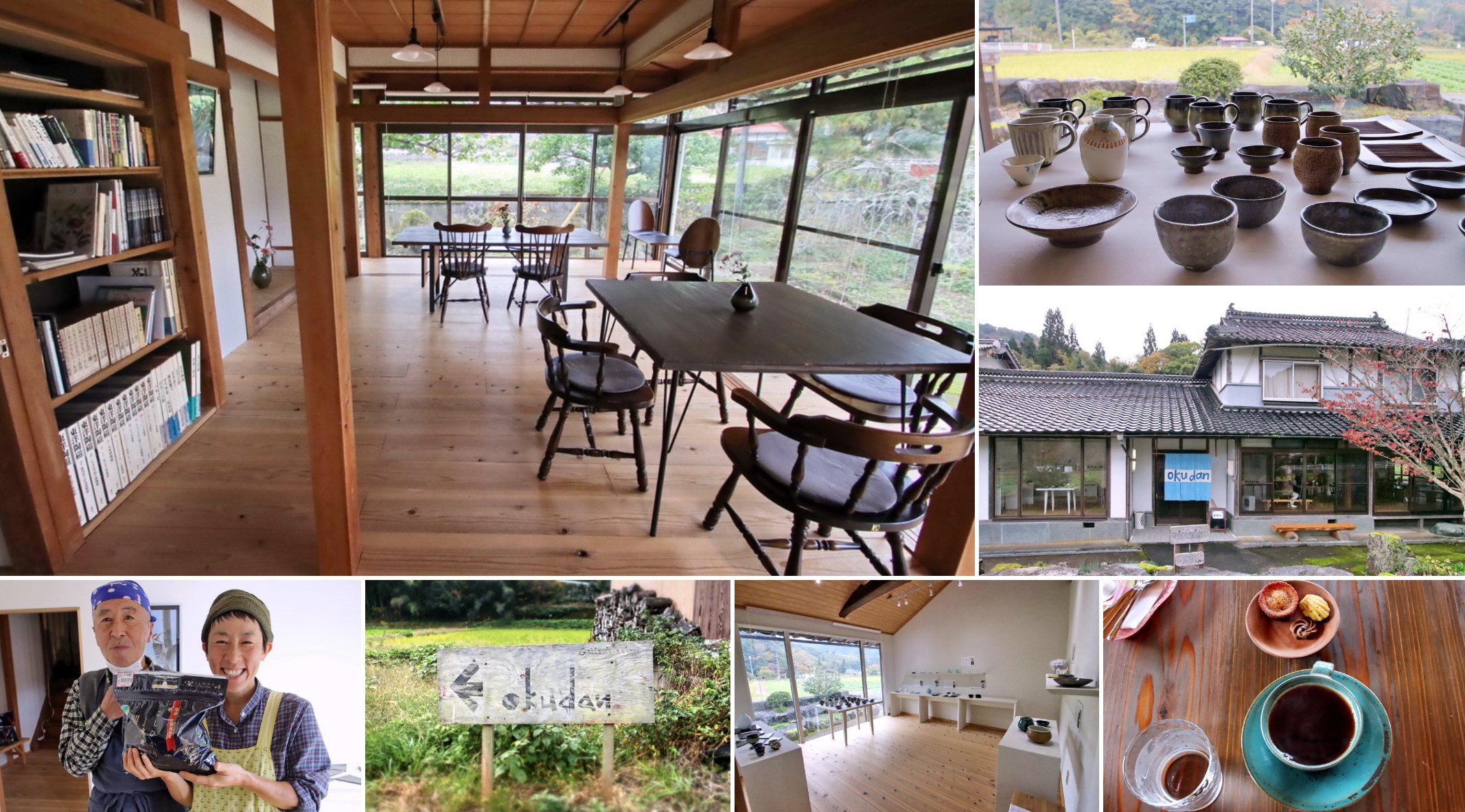
On weekends, visit Okudan Cafe Gallery in the rural Kawahara area. Enjoy coffee served in pottery by a Living National Treasure, then explore the ceramics and woodworking studios of Inaba Saigo.
Feb
Thu
Tottori, Japan: Okudan in the Inaba Saigo Craft Village | A Small Café in the Countryside, Where You Can Drink Coffee from Ceramics Made by a Living National Treasure
#SaninJapanTravel #RecommendedTottoriAttractions #MustVisitJapaneseKilnsAndPottery #CountrysideCafé #Okudan #InabaSaigoCraftVillage
Okudan Café Gallery (Inaba Saigo Craft Village)
Address: 84-2 Yumikochi, Kawahara-cho, Tottori City
Telephone: +81 90-7411-3150
Hours: Open only on Saturdays, Sundays, and public holidays, 10:00–16:00; closed for the winter throughout January each year
View a larger map
The Saigo area of Kawahara-cho in Tottori City is a rural district filled with pastoral scenery, as well as a major center for Japanese folk crafts such as ceramics, woodwork, and glasswork. Its pottery alone includes Ushinoto-yaki, Inshu Nakai-gama, Hanawa-gama, Sansan-gama, and Yanase-gama, the kiln of Living National Treasure Akihiro Maeta.
The Inaba Saigo Community Development Council, established in 2009, currently focuses on promoting the craft culture of the Saigo area in Kawahara-cho and calls the district the “Inaba Saigo Craft Village.” In addition to holding various exhibitions, it occasionally gives visitors opportunities for deeper encounters with different folk crafts. Most notably, it works with the local Saigo Elementary School and has designated every Wednesday as a lunch day using ceramic bowls. Each grade eats its school lunch from tableware made by a different local kiln: sixth graders use Ushinoto-yaki, fifth graders use Yanase-gama, third graders use Inshu Nakai-gama, and so on. By starting with children, the program lets local students learn about the craft culture of their hometown through everyday life.
Set amid the fields, Okudan is the café gallery promoted by the council. This small salon combines local folk crafts with outreach activities, allowing every visitor to discover the craft culture of Kawahara-cho’s Saigo area in a more relaxed and leisurely way.
▲ The understated Okudan Café Gallery stands in the countryside. It is a café gallery and salon converted from a private home.
▲ Lift this stylish noren curtain and you will find that Okudan’s interior is just as distinctive.
▲ Upon entering Okudan, you will see numerous brochures about crafts from the Saigo area on the entrance shelves, along with locally grown “Soul Rice.”
▲ Okudan has a long, townhouse-like layout. The exhibition room and restroom are to the left of the entrance, as shown, while the café is on the right.
▲ These two are Okudan volunteers. They explain the crafts displayed inside and how the Inaba Saigo Community Development Council promotes the development of local crafts.
▲ This is the “Soul Rice” grown by the female volunteer pictured above (1,200 yen for two kilograms). She said it was the first year she had produced an official harvest. I bought a bag, and the cooked rice was springy, plump, and extremely delicious.
▲▼ The male volunteer explains the history and current state of the council’s partnership with Saigo Elementary School, which made every Wednesday a lunch day using ceramic bowls.
Okudan’s craft exhibition room is not large. In the bright, white-painted space are works from eight or nine local workshops in the Saigo area of Kawahara-cho, including Ushinoto-yaki, Inshu Nakai-gama, Hanawa-gama, Sansan-gama, Yanase-gama by Living National Treasure Akihiro Maeta, as well as glasswork and metalwork. Each artist displays only about three to five pieces, accompanied by an introduction explaining the character of their work. Every exhibit has a clearly marked price, so visitors can purchase anything they like and support local crafts.
▲ These are works from the kiln we made a special trip to visit on this journey,
Inshu Nakai-gama.
The plate in the picture was purchased by my friend.
▲ This is a piece of Ushinoto-yaki. The kiln began in the late Edo period during the Tenpo era (1830–1844) and is known for combining deep green and black glazes.
▲ A hanging ornament made by Ushinoto-yaki.
▲ A work by Sansan-gama, which moved from Tochigi Prefecture to the Saigo area of Kawahara-cho in 2020. Its glaze is clear and bright.
▲ Hanawa-gama, established in 2017, is known for its deep green “Kokegen” glaze.
▲▼ Works by Akihiro Maeta of Yanase-gama, a Living National Treasure of Japan. Inspired by Tottori’s snowy winter scenery, he creates a variety of white porcelain pieces whose warm texture contrasts with the cool hardness usually associated with porcelain.
▲ The everyday pottery in this section is not labeled with the workshop that made it, but I assume the pieces come from the kilns introduced above. Every item has its own character.
Okudan’s tearoom was converted from a Japanese-style guest room in a private home. When the community holds outreach events such as artist talks, this is the main venue; at other times, it operates as an ordinary café.
The interior uses warm wood tones, while expansive floor-to-ceiling windows bring the outdoor garden, rice fields, and distant mountains fully into view, creating an inviting and comfortable atmosphere. When ordering coffee or tea here—I did not photograph the menu, but a coffee costs 500 yen—you can first choose the cup you like. Naturally, all these vessels were made by kilns in the Saigo area. You can also use a piece from Living National Treasure Akihiro Maeta’s white porcelain series, though it costs an additional 500 yen.
▲▼ The café also has a reading area where visitors may freely browse the collection, which consists mainly of books on Japanese folk crafts.
▲ Before drinking your coffee, choose your favorite cup from this wooden cabinet. Using a piece from the Living National Treasure’s white porcelain series costs an additional 500 yen.
▲ Every café table has a single-flower vase made from local pottery. I assume the one pictured is a work by Sansan-gama.
▲ A single-flower vase also hangs on the wall. This one appears to be Ushinoto-yaki.
▲ One cup of coffee with a small snack costs 500 yen.
▲ The coffee cup my friend chose from the Living National Treasure’s white porcelain series. She said, “I can’t afford to buy one, but at least I got to use one.”
▲ A visit to Okudan lets you drink coffee and appreciate local crafts. It also helps you understand something potters often say: pottery reveals its true value only when it is used.
For more up-to-date food and travel information, you are welcome to join:
Source: 齊哥的食旅探go | Original URL: https://paulchi543.pixnet.net/blog/posts/15347103033
Where would you stay for this story?
This is a stay-recommendation demo. Partner links will be enabled after confirmation.
Kaike Onsen and Tottori stays
Choose an onsen inn, city hotel or stay area that fits the article context.