
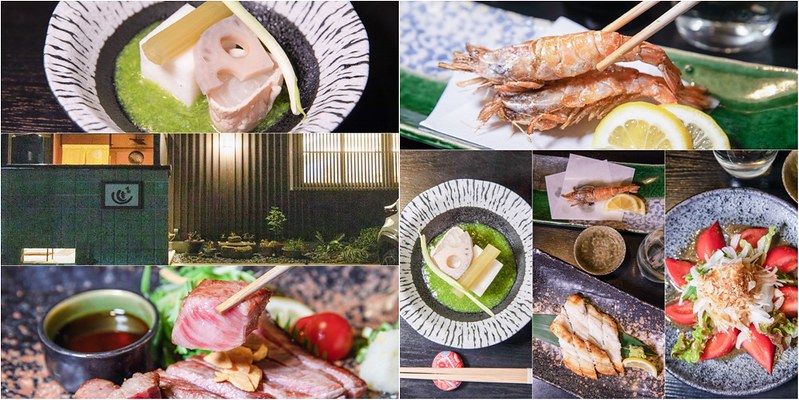
Michelin-recommended Ajidokoro Shin in Kurayoshi serves seafood from the Sea of Japan, mountain produce, and Tottori regional dishes—an inviting choice for a relaxed izakaya-style dinner.
Ajidokoro Shin (
Official website
): 2-7-1 Ageicho, Kurayoshi, Tottori Prefecture; telephone: 0858-26-9366; hours: 5:00-11:00 p.m. (closed Sundays and national holidays)
"Tottori has Michelin restaurants" is something I may have to repeat hundreds or thousands of times before everyone knows it. For people chasing stars, especially Michelin stars overseas, Tottori is unquestionably a good choice. First, it is rural and therefore inexpensive. Second, also because it is rural, reservations are relatively easy to obtain. In the previous article I introduced what I personally suspect is Japan's least expensive one-star Japanese restaurant, with an 8,000-yen dinner:
Jun
as well as the only Michelin-listed ramen in the San'in and Sanyo regions,
Hot Air.
While the topic is still fresh, here is a third Tottori Michelin restaurant. Incidentally, I will return to Tottori in August to collect more Michelin restaurants. At the end of October,
小虎吃貨團
will also hold its first Japan Michelin tour, following tours of Macao, Thailand, and South Korea.
Tottori Michelin list:
Two Michelin stars
Kaniyoshi http://www.kaniyoshi.com/
The first crab-specialty restaurant in the world to receive two Michelin stars.
Mitsuki https://www.facebook.com/pages/%E3%81%BF%E3%81%A4%E3%81%8D/1419382514947642
The owner focuses on Kyoto cuisine and accepts only one party each day because he does not want other guests to affect their experience. Diners can enjoy the food at ease.
One Michelin star
Jun https://ya11000.gorp.jp/
Dishes draw out the inherent flavors of their ingredients and let diners enjoy the tastes of the season.
Meal report:
[Tottori Michelin Series 2] Jun: Japanese cuisine made with Tottori ingredients, including exquisite Tottori hairy crab, mosa shrimp, and white squid; Japan's cheapest one-star Japanese restaurant?
Akiyama https://tabelog.com/tottori/A3102/A310201/31004297/
Authentic kaiseki cuisine that pursues beauty not only in flavor but also in appearance.
Shusai Kikyo-ya http://www.kikyouya-yonago.com/
Set menus made with local mountain and seafood ingredients. The owner is a sake expert, particularly in warmed sake, and can recommend a sake suited to the meal.
Hakushu Suzunoki http://www.suzunoki.tottori.jp/
The owner's commitment is to focus on traditional Japanese food instead of creative cuisine.
Bib Gourmand
Shokushu Totoro https://tabelog.com/tottori/A3101/A310101/31004114/
Soba Kawaguchi https://soba-kawaguchi.gorp.jp/
Tanrei Tori Ramen Hot Air https://www.facebook.com/hotairgo1/
[Michelin in Tottori, Japan] Hot Air: Travel to a 500-year-old hot-spring village in rural Tottori for Michelin ramen made with local ingredients and soak freely in three complimentary footbaths
Fee des Neiges https://www.feedesneiges.jp/
Rengatei http://sp.raqmo.com/rengatei/
Mitakien https://ashidumitakien.jp/
Ajidokoro Shin https://www.ajidokoro-shin.com/
Sakedokoro Juan https://tabelog.com/tottori/A3103/A310301/31000703/
Sobadokoro Kamidai https://tabelog.com/tottori/A3103/A310301/31000246/
Mingei Kappo Onajimiya http://www.onajimiya.jp/
This Tottori Michelin guide also mentions dozens of other restaurants. One example is this crab restaurant in Sakaiminato, Kitaro's hometown:
[Sakaiminato food in Tottori] Ajidokoro Misa: An inexpensive and delicious red snow-crab kaiseki lunch for 3,300 yen
Indeed, the reservation-only lunch costs just 3,300 yen, yet the crab kaiseki uses nearly two red snow crabs per person. It is another fine restaurant that we are doing everything possible to include on the 小虎吃貨團 Michelin tour at the end of October.
Ajidokoro Shin is a well-known local izakaya in Kurayoshi. If possible, I recommend making a reservation and staying near Kurayoshi Station. Then it will not matter if you have a little alcohol or drink until late. On this occasion, for example, we stayed at Hotel St Palace Kurayoshi beside the station (
discount room rates on agoda
). If you want another round after dinner, there are also yakiniku restaurants nearby that remain open until 11:00 p.m. or midnight.
The portrait on the wall looks remarkably like him. As soon as we entered, the owner greeted us warmly. According to the friend from Tottori who showed us around, the restaurant mainly uses ingredients from Tottori. The head chef buys seafood at the fish market every day, and the cooking centers on local Tottori dishes. I did not used to like visiting izakaya when traveling in Japan. After being trained by Goro from The Solitary Gourmet, however, I came to love them. For anyone who enjoys local regional cooking, an izakaya is unquestionably the best choice.
Incidentally, Tottori also has two restaurants that Goro has visited.
[The Solitary Gourmet map and visit No. 59] Matsuya Horumon: A warmhearted sixty-year-old Tottori institution serving its signature offal teppan yakisoba, teppanyaki, and oden
As for the other one, perhaps we should simply take everyone there on the year-end food tour.
The restaurant's corridor is filled with local Tottori sake and fine bottles gathered by the owner from around Japan. Behind it is counter seating suitable for one or two guests.
Five or six private rooms of different sizes line both sides of the corridor. They seat four to eight people, but advance reservations are best.
Incidentally, one of my companions on that Tottori trip was the television food-show celebrity
焦志方.
Brother Jiao held the Tottori Michelin book for our photo. We were also joined by two beautiful members of the Rakuten Girls,
倪暄 Eli
and
曲羿 Chuyi.
This is one advantage of the countryside: even local sake is unbelievably cheap. A flask costs less than 1,000 yen. Ajidokoro Shin offers sake from more than ten Tottori breweries. If you do not know what to drink, consult the recommended sake list or simply ask the server. Every time, they recommend warmed Hiokizakura and Takaisami, ha!
This Otani Shuzo even has a collaboration bottle bearing Shohei Ohtani's number 17. I want it so, so badly, even if I could have only the box. Reference article:
[Food and local sake in Tottori, Japan] Otani Shuzo, maker of Takaisami: 150 years of tradition with endorsements from prime ministers, Shohei Ohtani, and Hidetoshi Nakata
Dishes can be ordered individually, and set courses are also available. That day, our Tottori friend asked the restaurant to choose the dishes for us. See the official website for the detailed menu:
A la carte
Set courses
Yes, once again we drank Hiokizakura and Takaisami, including Goriki. I also personally recommend Tottori's Hoshizora Mai beer.
This beer restaurant in an old house is also in Kurayoshi. If you stay in town, add it to your list. I like it very, very, very much: on three consecutive visits to Kurayoshi, I stopped by for two drinks every time, ha!
[Kurayoshi food in Tottori, Japan] Brew Lab Kurayoshi: A four-hundred-year-old townscape, a century-old wooden house, and the intoxicating aroma of craft beer
The otoshi at Ajidokoro Shin was exceptionally beautiful. An otoshi, incidentally, is part of Japan's dining-and-drinking culture and is served at most establishments that offer alcohol. You do not get to choose what is served that day, and you eat what you receive. You have to pay even if you do not eat it, so please respect the local custom.
The striking green sauce beneath the otoshi was an extremely fine asparagus puree. Lotus root and Tottori vegetables were arranged on top.
The white cube was especially unusual. At first I thought it was tofu, but it was yam. Our friend said Tottori yams are famous and have a very different texture. Since moving to Tottori, he has actually found it hard to get used to yams elsewhere. After one bite, we nodded vigorously. Its crunch was light and refreshing; it was soft yet airy and delicate, unlike ordinary yam, which clings slightly in the mouth. This is apparently due to Tottori's distinctive sand. I thought another piece was fish wrapped in pork, but I was only half right. The exterior was lightly seared Daisen pork and the center was onion. Juice sprayed out when I bit into it, and dipping it in the asparagus puree underneath made it outrageously delicious. This dish went straight into my personal top three otoshi.
The second dish was mosa shrimp. Embarrassingly, I did not hear this name until my seventh visit to Tottori. According to our friend, this shrimp is found only in the Sea of Japan, its season runs from September through May, and specimens from the San'in coast are especially sweet.
The shell of a mosa shrimp is a little hard, somewhat like the horned shrimp from Guishan Island off Yilan in Taiwan. The texture is similarly crisp, the sweetness is exceptionally high, and the purple roe in the head tastes astonishingly fresh.
Izakaya commonly serve sashimi as otoshi, using whatever fresh fish arrived that day. Each type usually comes in two or three slices, depending on the number of people. This plate had seven kinds of fish, with two or three slices of each. Particularly distinctive was Tottori white squid in the center, in season from June through September. It was extraordinarily crisp, springy, tender, and sweet, very different from squid elsewhere. I also learned that Tottori has bluefin tuna, at the upper left, which was equally rich and fatty. Another Tottori fish, called chaya fish in the source, at the lower right, had a slightly crisp and springy texture and a sweetness unlike any ordinary white fish. It was truly impressive. The shellfish were delicious too. My one regret was missing Tottori's most famous rock oyster, Natsuki. I hope I get to eat it in August.
This was lightly grilled, overnight-dried eel. When it arrived, Brother Jiao said, "See? Tottori actually has every familiar Japanese fish, and they are all this delicious and comparatively inexpensive." Simply grilling this eel lightly made it wonderfully fragrant. It was soft and tender, with a slightly charred aroma and faint crispness, making it superb with alcohol.
The Japanese-style salad used tomatoes from Nichinan in Tottori. I heard that Nichinan even has soft serve made from these tomatoes. Compared with ordinary tomatoes, they seemed juicier and less acidic, with a delicate fragrance. Combined with sliced onion and bonito flakes and dressed with Japanese-style sauce, the result was mouthwateringly tart.
This other dish was tuna sashimi salad. The Japanese-style dressing also contained a touch of mustard, making it highly appetizing.
Next came the famous Tottori beef. One story in Tottori says that Tottori was the first prefecture to raise wagyu. That first animal was even given the name Ketaka-go. Japan supposedly did not yet have the term "Japanese wagyu" at the time, which is why Tottori is called the birthplace of wagyu.
As someone utterly unable to resist Japanese wagyu, I do not care much whether this story is true. In any case, among the dozens of Japanese wagyu varieties I have eaten, Tottori beef is relatively lean and especially sweet. If you cannot handle overly fatty beef, Tottori is unquestionably a good choice. This wagyu is also comparatively well suited to steak. It is soft and tender, with one or two seconds of pleasing chew when it enters the mouth. The meat's sweetness and the richness of its fat are in roughly equal balance. It is outrageously delicious.
There is another explanation for why Tottori wagyu seems less greasy. Tottori beef is said to be the only Japanese wagyu evaluated by an oleic-acid level of
55%.
In simple terms, 55% oleic acid means that oleic acid accounts for 55% of the fat and melts when heated to 40 degrees Celsius. It is the same component found in olive oil and is supposedly easier for the human body to absorb and metabolize. Put even more simply, this fat places less burden on the body, so eating plenty will not make you "fat," "fat," "fat." This is important, so I said it three times. I explain Tottori wagyu in detail in
[Kurayoshi food in Tottori, Japan] Yakiniku Masashige Kurayoshi: Whole-animal Tottori beef purchasing, Tottori wagyu with 55% oleic acid, Daisen chicken, and raw beef with Daisen egg
including the story of Ketaka-go. Interested readers can turn to that article.
Grilled Daisen chicken with ponzu sauce. Many people may not know Mount Daisen, but it is considered sacred in Tottori and throughout the San'in and Sanyo regions. It is also known as San'in Fuji or Hoki Fuji. Because the mountain, soil, and water are excellent, agricultural products such as Daisen milk, my third-favorite milk in Japan, Daisen pork, and Daisen chicken are all famous. My media friends even call Daisen chicken a seriously underrated meat. If you do not eat beef, you can feast on Daisen chicken in Tottori.
How should I describe it? If you prefer chicken thighs, even Daisen chicken breast is remarkably soft and tender, neither dry nor tough, and releases a little juice when bitten. The best way to prepare it is to fry or grill it lightly. What about Daisen chicken thighs, you ask? Their texture is fine and tender, and juices keep dripping when you lift a piece. The flavor carries an explosive sweetness reminiscent of Taiwan's free-range chicken. The skin is springy, the fat is excellent, and light grilling makes it outrageously fragrant and delicious.
):
2-7-1 Ageicho, Kurayoshi, Tottori Prefecture; telephone:
0858-26-9366;
Hours:
5:00-11:00 p.m. (closed Sundays and national holidays)
More Tottori Michelin articles:
Source: 小虎食夢網 | Original URL: https://www.foodtigertw.com/blog/posts/3050564688
Where would you stay for this story?
This is a stay-recommendation demo. Partner links will be enabled after confirmation.
Kaike Onsen and Tottori stays
Choose an onsen inn, city hotel or stay area that fits the article context.