
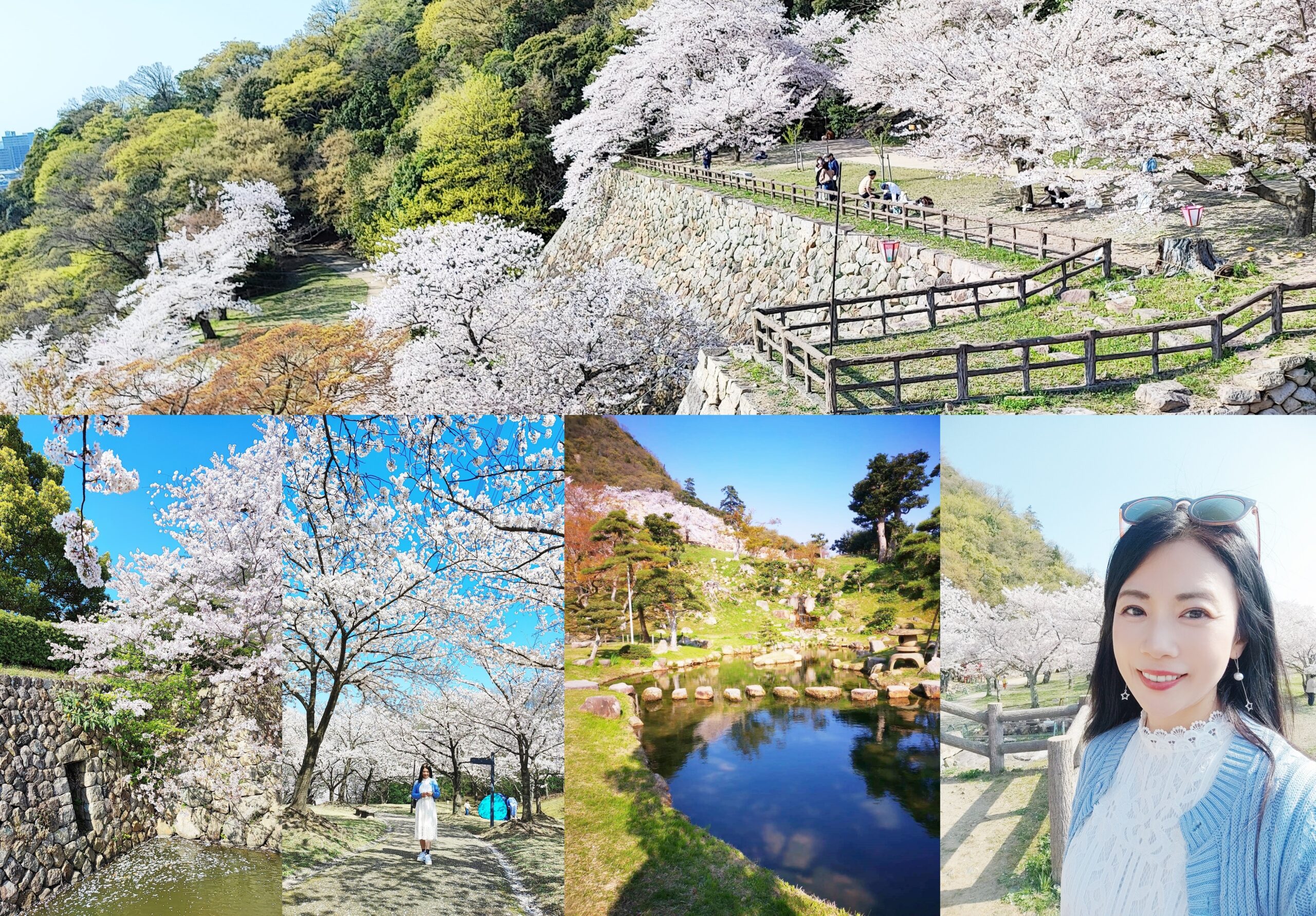
Tottori Castle Ruins and Kyusho Park are listed among Japan’s 100 Fine Castles and 100 Best Cherry Blossom Spots, with about 400 cherry trees reaching peak bloom from late March to early April.
◎Japan's Chugoku Region, San'in, Tottori Prefecture: [Tottori Castle Ruins and Kyusho Park] Tottori History, One of Japan's 100 Famous Castles, and One of Japan's 100 Best Cherry-Blossom Spots
Chugoku Region (Tottori, Shimane, Okayama, Hiroshima, and Yamaguchi)
June 9, 2023
July 28, 2023
傑菲亞娃 ◎ Japan, Chugoku Region, San'in, Tottori Prefecture, Tottori City: [Tottori Castle Ruins and Kyusho Park] Tottori History, One of Japan's 100 Famous Castles, and One of Japan's 100 Best Cherry-Blossom Spots
🕵️A visit to the Tottori Castle Ruins is essential for anyone who wants to understand Tottori's history. In terms of the better-known history of the Sengoku period, ✔️the story begins around 1575, when the Mori forces repelled the Amago army. On closer examination, however, Tottori's most famous historical event was undoubtedly➡️the Siege of Tottori in 1581.
🧿In 1580, Hashiba Hideyoshi sent troops to besiege Tottori Castle, beginning the first siege. In the end, Yamana Toyokuni reached a peace agreement with the Oda clan, and the Yamana submitted to
Oda Nobunaga.
In September, the Mori clan counterattacked, and the Yamana once again surrendered to the Mori. In 1581, acting once more on Nobunaga's orders, Hashiba Hideyoshi attacked Tottori Castle. Hideyoshi again employed the starvation tactics he had used against Miki Castle, cutting off the Mori army's food supplies by both land and water. During the four-month siege, horrific accounts emerged of people inside the castle eating other people. The struggle ended when the lord of the castle,
Kikkawa Tsuneie,
opened the gates, surrendered, and took his own life. After the Oda clan captured the castle, the former Azai retainer
Miyabe Keijun
was appointed its castellan. In 1585, his military service in the
Kyushu Campaign
earned him formal appointment as lord of Tottori Castle.
Photo from the official website
✅Based on the account above, 傑菲亞娃 has summarized Tottori's history as follows⬇️:
●During the Tenbun era of the Sengoku period (1532-1555), Yamana Nobumichi built Tottori Castle using the natural terrain of Mount Kyusho in order to oppose Yamana Suketoyo→During the Azuchi-Momoyama period, it became an important stronghold contested by Hashiba Hideyoshi and the Mori clan→During the Edo period, it served as the administrative seat of the Tottori Domain. (Simply put, it was a mountain castle centered on Mount Kyusho from the Tenbun era in the mid-16th century until the Meiji Restoration.)
Photo from the official website
💟The Tottori Castle Ruins are located within Kyusho Park. The park contains several hundred cherry trees, including Somei-Yoshino and Satozakura varieties, making it one of Tottori's finest places for cherry-blossom viewing. In addition to being selected as one of Japan's 100 Best Cherry-Blossom Spots, the ruins are also among Japan's 100 Famous Castles.
🔰[Tottori Castle Ruins and Kyusho Park] The cherry tree at the entrance is the specimen tree used by the Tottori Local Meteorological Office to determine when the blossoms have opened.
🔰[Tottori Castle Ruins]: Located within Kyusho Park.
[Tottori Castle Ruins, Kyusho Park]: About 400 cherry trees of various kinds, including Somei-Yoshino and Satozakura, are planted around Kyusho Park.
[Tottori Castle Ruins, Kyusho Park]
: Small food stalls appear during cherry-blossom season (
• Best viewing period:
Late March to early April)
[Tottori Castle Ruins, Kyusho Park]
: Jinpukaku can be seen in the distance➡️This two-story building was designed by architect Katayama Tokuma (1854-1917).
: Entering the Tottori Castle Ruins
🧿A local friend told me that #TottoriCastle was built around Mount Kyusho and stood from the 16th century until the Meiji Restoration. It was originally a castle at the summit of Mount Kyusho, laid out in a stepped enclosure design. Later, amid factional disputes, the 1873 Castle Abolition Order left only #MatsueCastle standing, while Tottori Castle was dismantled.
💁Frankly, climbing the stone steps takes stamina. Looking up at the cherry blossoms on the summit, I suddenly realized how high the old castle stood. Building it could not have been easy, and defending it must have been even harder!➡️Whether the medieval Sanjo-no-maru enclosure on the mountain or the Ninomaru and Tenkyumaru enclosures at its foot, they can now exist only as a National Historic Site. The thought is deeply poignant.
🔰[Tottori Castle Ruins, Kyusho Park]: Walking uphill along the slope, you can still see the surviving castle keep foundation and stone walls. The main structures, including the keep itself, were dismantled under the 1873 Castle Abolition Order.
🔰[Tottori Castle Ruins, Kyusho Park]:
At the foot of the mountain remain the Ninomaru, Tenkyumaru, Sannomaru, and other enclosures built from the Keicho era through the Meiji period.
🔰[Tottori Castle Ruins, Kyusho Park]:
At the summit are the surviving remains of the medieval Sanjo-no-maru enclosure.
⬇️Phoenix Tours specially arranged afternoon tea for us beneath the cherry trees. Watching the petals fall like snow while enjoying tea and refreshments was wonderfully romantic. 💐🤗
🔰[Tottori Castle Ruins, Kyusho Park]: Looking down over Jinpukaku and the city of Tottori.
🔰[Tottori Castle Ruins, Kyusho Park]: Jinpukaku
A magnificent example of architecture from Japan's Meiji era (1868-1912).
In 1906, the 14th head of the Ikeda family, Ikeda Nakahiro, commissioned Jinpukaku for use as his private residence.➡️In 1907, when Crown Prince Yoshihito—later Emperor Taisho—toured the region, Jinpukaku served as his lodging. The true purpose of building the residence may therefore have been to win the favor of the future emperor. The Ikeda family ruled this region throughout the rise and decline of Tottori Castle. In 1944, Jinpukaku was donated to the Tottori city government.
⭕️[Tottori Castle Ruins, Kyusho Park]: Cherry blossoms and old castles always evoke the spirit of Japan's samurai.
[Tottori Castle Ruins and Kyusho Park]
• Best viewing period: Late March to early April
• Address: Higashimachi, Tottori City, Tottori Prefecture
Where is [Tottori Prefecture] in Japan's Chugoku and San'in regions? How do you get there from Taiwan, what is Tottori Airport like, and what can you do there? (Complete guide
)➡️[This article contains links to the sights in our five-day itinerary. Please take a look.] 😊
🔰If you are interested in joining a direct charter-flight tour to Tottori, please see [
Phoenix Tours: “Five-Day Journey Through the Myths of San'in, Tottori, and Shimane”
✅Limited autumn 2023 departures: October 20, October 24, October 28, and November 1
#DirectChinaAirlinesFlight
👉Tottori Sand Dunes Conan Airport
♥Spectacular Tottori Sand Dunes ♥Journey on the Wakasa Railway ♥Matsue Castle Horikawa Sightseeing Boat
♥Adachi Museum of Art ♥Four nights in hot-spring inns ♥Crab and wagyu feast
Tags
TOTTORI
Kyusho Park
Jinpukaku
Travel in Japan
Japan's 100 Best Cherry-Blossom Spots
Japan's 100 Famous Castles
Tottori Castle Ruins
Article navigation
Previous Post
◎Japan's Chugoku Region, San'in, Tottori Prefecture: [Tottori Sand Dunes] Formed Over 100,000 Years and Accumulated Over a Millennium—Nature's Gift Meets Tottori City (Revisited in 2024)
Next Post
◎Japan's Chugoku Region, San'in, Tottori Prefecture Flower Park: [Tottori Hanakairo Flower Park] Japan's Largest Flower Theme Park, an Enormous Domed Greenhouse, and a One-Kilometer Observation Walkway
Source: 傑菲亞娃 | Original URL: https://www.jeffiafang.com/2306092038-2/
Where would you stay for this story?
This is a stay-recommendation demo. Partner links will be enabled after confirmation.
Kaike Onsen and Tottori stays
Choose an onsen inn, city hotel or stay area that fits the article context.