
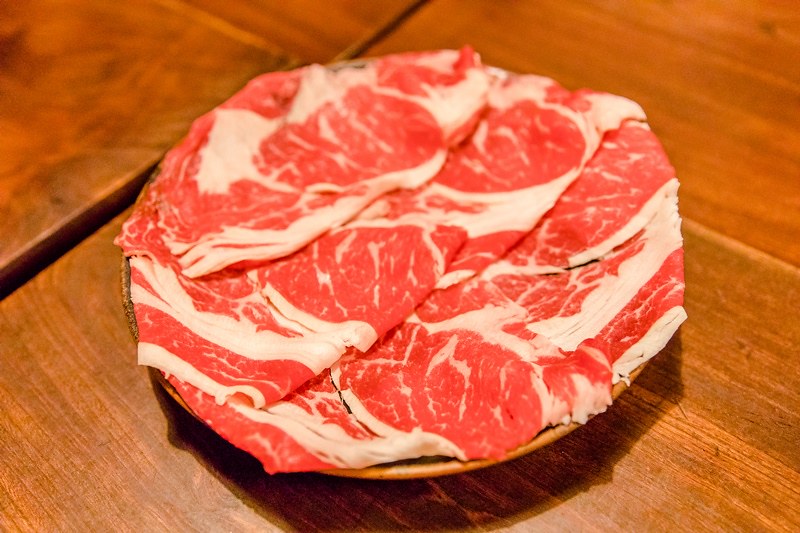
Takumi Kappo is celebrated as the birthplace of shabu-shabu. Its signature hot pot showcases finely marbled Tottori wagyu, making it an ideal introduction to one of the prefecture’s classic flavors.
Takumi Kappo: 652 Sakaemachi, Tottori City, Tottori Prefecture. Telephone:
0857-26-6355. Hours:
11:30-14:30 (L.O. 14:00), 17:00-22:00 (L.O. 21:00)
Shabu-shabu, a great favorite among Taiwanese diners, is generally considered to have originated in Japan. But did you know that the restaurant where it began is located in the relatively rural area of Tottori? Its inspiration is also said to have come from Chinese mutton hot pot. And have you heard that Inpaku-gyu, an original breed behind Japanese wagyu, also comes from Tottori? With a chance to taste the origins of two Japanese culinary traditions at once, how could you travel to Tottori without following the aroma here?
That day I had originally planned to eat ramen and had already picked out a shop known in Tottori for beef-bone ramen, but it was unexpectedly sold out... To make up for my disappointment, a local friend brought us to Takumi Kappo, which is famous for its “Tottori wagyu shabu-shabu.” I checked its TABELOG score and found that it was an even higher “3.38.”
According to my local friend, the main reason this restaurant is famous not only in Tottori but throughout Japan is that it is the birthplace of Japanese shabu-shabu. The idea is said to have been inspired by Chinese mutton hot pot.
Among the Tottori wagyu varieties that Taiwanese visitors may know less about, the best known is Inpaku-gyu, said to be the ancestor of Japanese wagyu. Curious, I asked about it, but the wagyu served here is not actually Inpaku-gyu.
The appetizer was whelk meat that was a little tough and slightly fishy. I just could not handle it...
Honestly, this Tottori wagyu is truly delicious. Even though it looks a little like pork, both the sweetness of the fat and its silky, tender texture are flawlessly tasty. Another reason may be that we were eating it as shabu-shabu, so it was relatively less greasy. I could absolutely finish two large plates by myself with no problem at all!!!
The broth here is very simple. When you drink it, there are almost no distracting flavors, only a delicate hint of kombu.
After swishing the Tottori beef, we moved on to assorted vegetables and mushrooms. The preparation is very simple and mostly preserves the ingredients' original flavors. It is unmistakably light and refreshing, making it easy to keep eating bite after bite.
My favorite dip for Japanese wagyu shabu-shabu is sesame sauce, and this bowl may be the best I have ever tasted. In addition to a well-balanced sesame aroma that is neither too strong nor overpowering, it carries a faint, fresh, fruit-like sweet-and-sour note. It adds flavor while cutting through the richness—truly impressive.
The fruit served after the meal was a persimmon grown in Tottori, and it was genuinely delicious. Those familiar with Tottori persimmons will know the Saijo persimmon.
For diners who do not eat beef, the restaurant also offers various set meals featuring Tottori seafood. They are priced at around 2,000 yen and offer excellent value.
Tottori local sake, Takaisami. I prefer sake with a little more fresh sweetness.
More:
San'in - Tottori (21)
Source: 小虎食夢網 | Original URL: https://www.foodtigertw.com/blog/posts/3048910353
Where would you stay for this story?
This is a stay-recommendation demo. Partner links will be enabled after confirmation.
Kaike Onsen and Tottori stays
Choose an onsen inn, city hotel or stay area that fits the article context.